Designing Human-AI Interaction for Preventative Pet Health
Product Design
Felis is a multimodal biosensing system that bridges the gap between feline expression and human understanding, turning everyday pet routines into opportunities for preventative care.
Problem Statement
There are 76.3 million pet cats in the United States. Nearly all of them share the same fundamental problem: they are biologically wired to mask illness.
Cats mask illness aggressively and instinctively. It's a prey-animal survival mechanism that has never been bred out of them. By the time a cat vocalizes or shows obvious distress, the condition is often advanced.
The window for early intervention exists, it's just invisible to the naked eye.
Initial Attempt
I started where the clues seemed most obvious: body language.
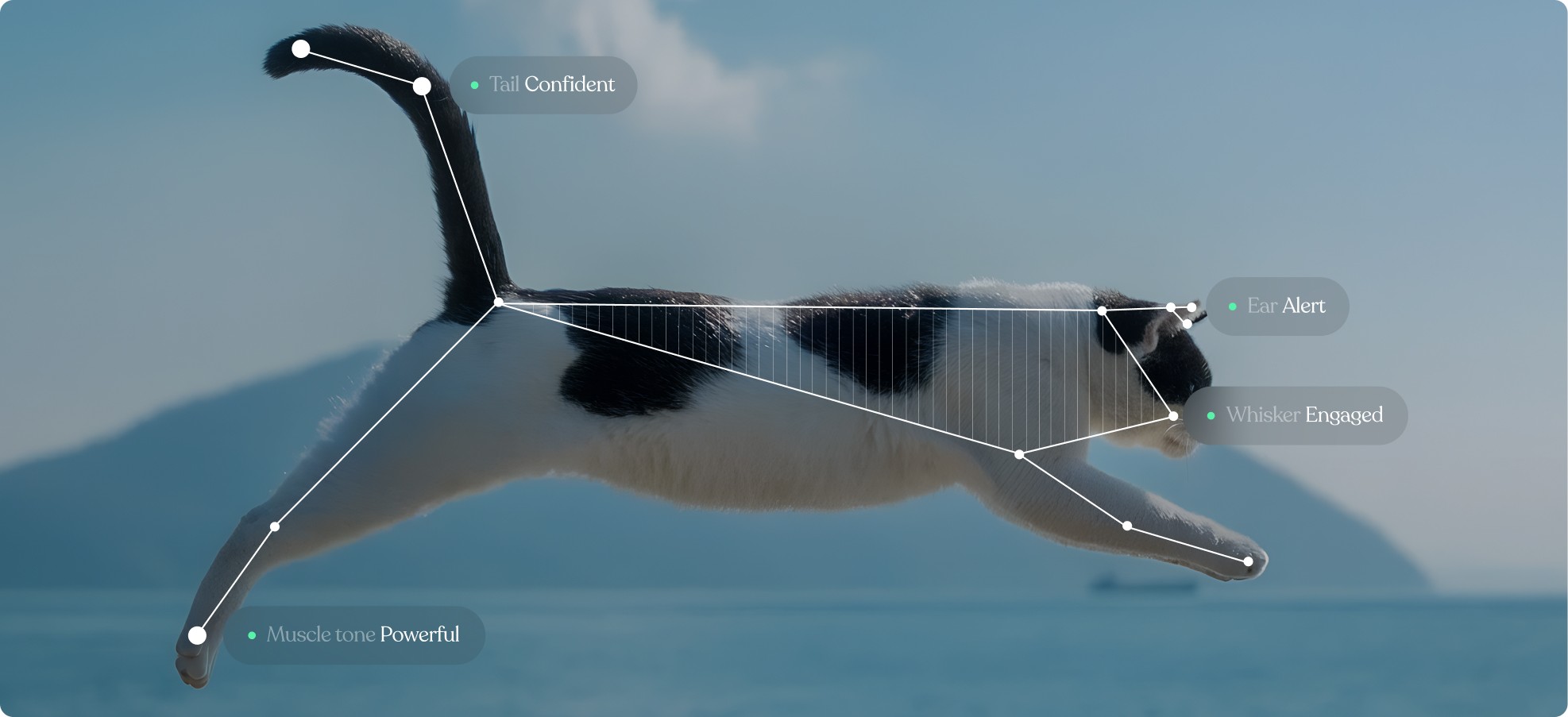
Cats communicate through posture and movement. So, I built an AI-based posture analysis tool that gave pet parents a real-time interpretation of what their cat was experiencing.
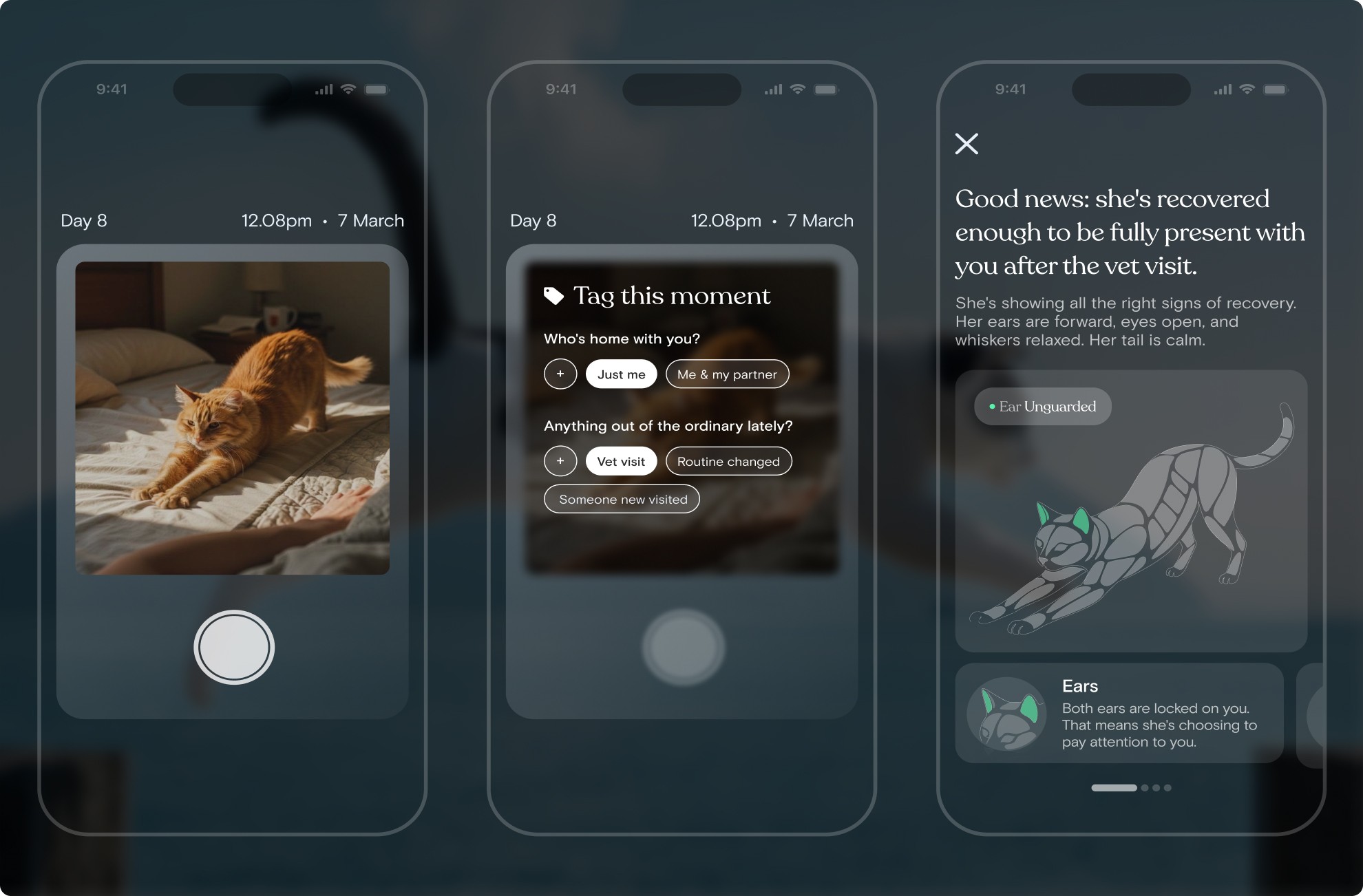
When I tested it, two things kept coming back.
First: it was reactive. People reached for their phones when something already looked wrong. By then, they were late.
Second: cats are crepuscular. The moments that matter most often happen at 3am, long after you've gone to bed. A camera tool couldn't solve either of these. What was needed was a fundamentally different kind of sensing.
Research
Jakob von Uexküll's concept of Umwelt became the philosophical anchor of this project. Every organism perceives a unique slice of the world, shaped by the signals it can send and receive.
This reframing changed the design question.
The problem wasn't how do we understand cats better. It was: what does a system need to perceive and represent if it is to operate honestly inside a cat's Umwelt, and not impose a human one onto it?
From 11 user research sessions with pet parents and animal behaviorists, three things became clear.
Owners consistently missed gradual change, only noticing acute events.
Vet visits were too infrequent to catch drift.
Existing consumer pet tech either overclaimed (emotion attribution) or undersolved (activity rings).
No product was reasoning from an individual cat's baseline. All were measuring against population norms that tell you almost nothing about your cat.
Design Principles
Three principles emerged from research and held through every design decision:
Epistemic restraint. Never claim to know what the sensors cannot verify. No emotion labels. No "your cat is stressed." Only what can be observed, measured, and compared.
Delta-first architecture. Health deviations are meaningful relative to an individual baseline, not a population average.
Document, don't diagnose. The role of the AI is to surface what's changing and name it clearly. Not to replace the vet, but to give the vet something worth acting on.
Solution
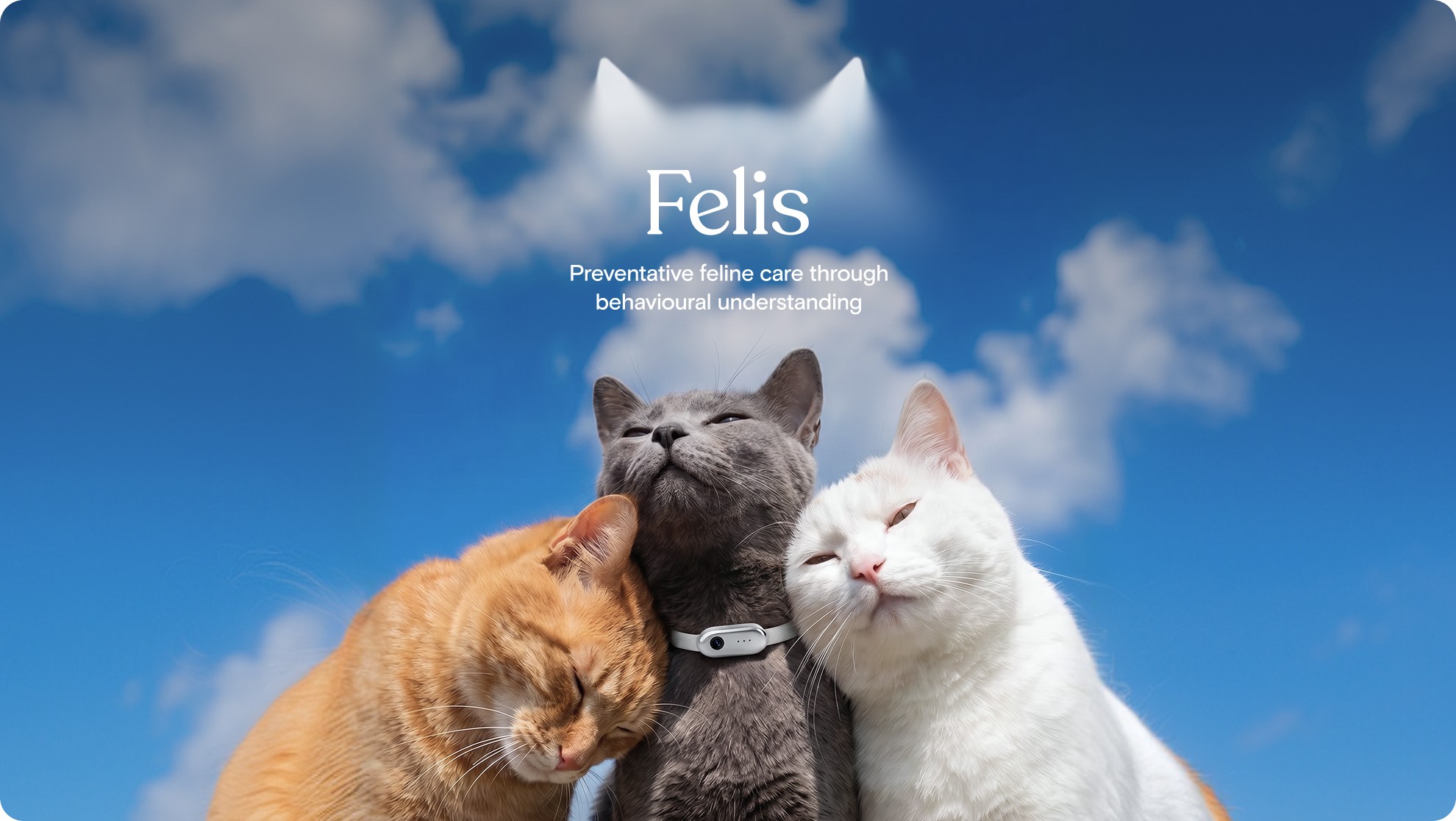
Felis is a multimodal biosensing system that combines AI and continuous data to translate everyday cat routines into opportunities for preventative care.
Collar
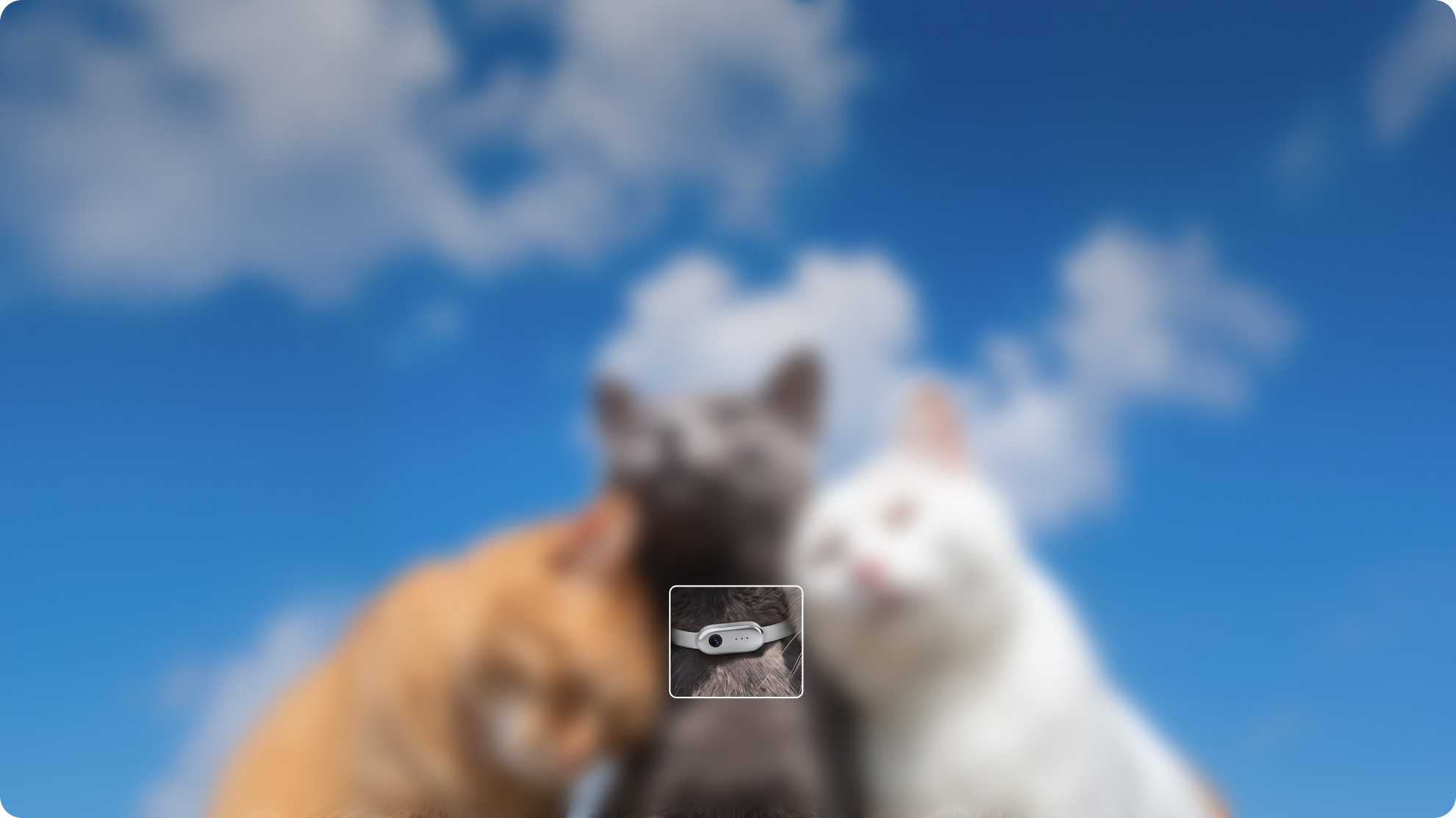
It is designed for adult cats only, sized and weighted appropriately, under 5% of body weight.
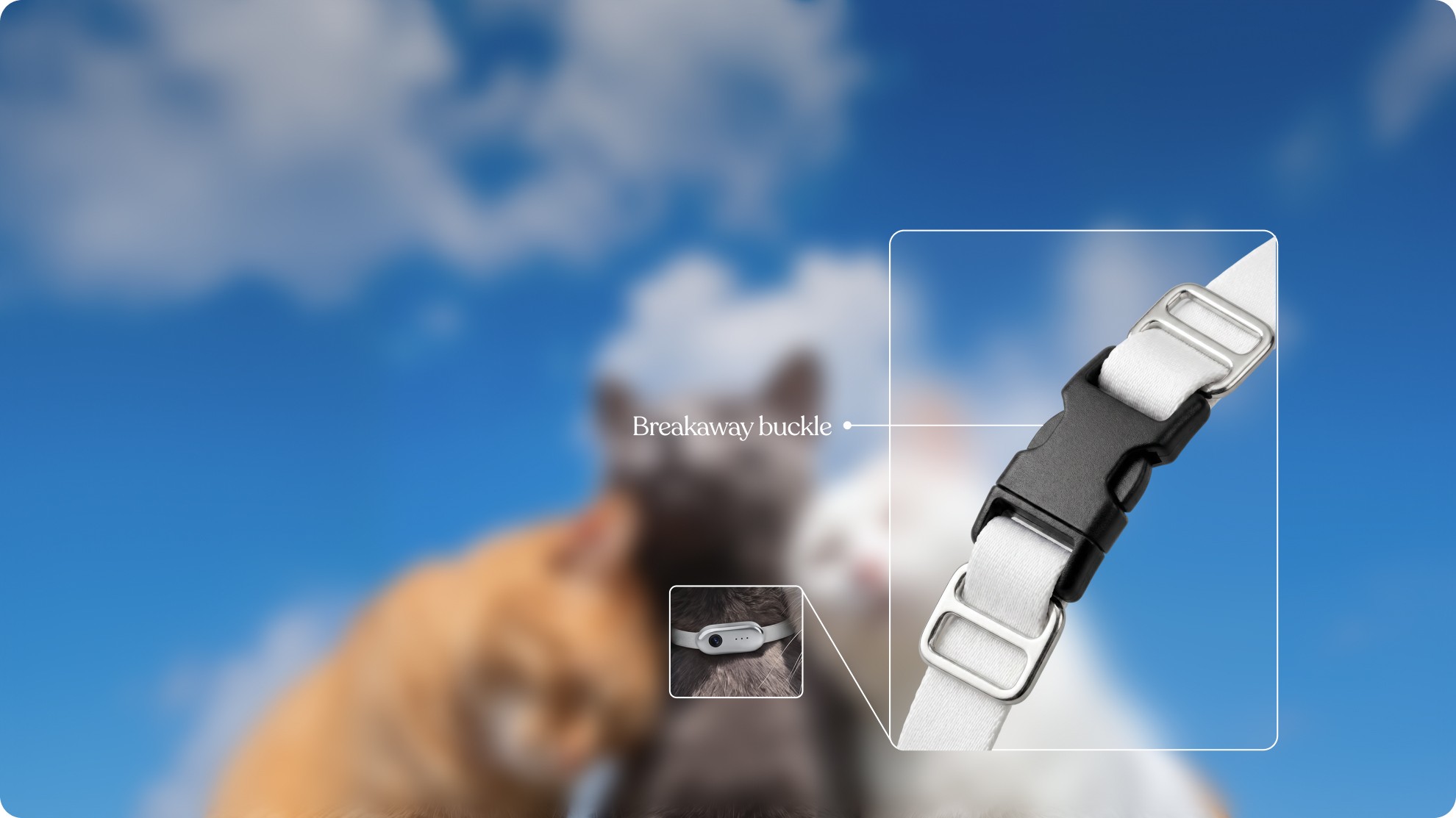
The strap is hypoallergenic BioThane with a breakaway safety buckle.
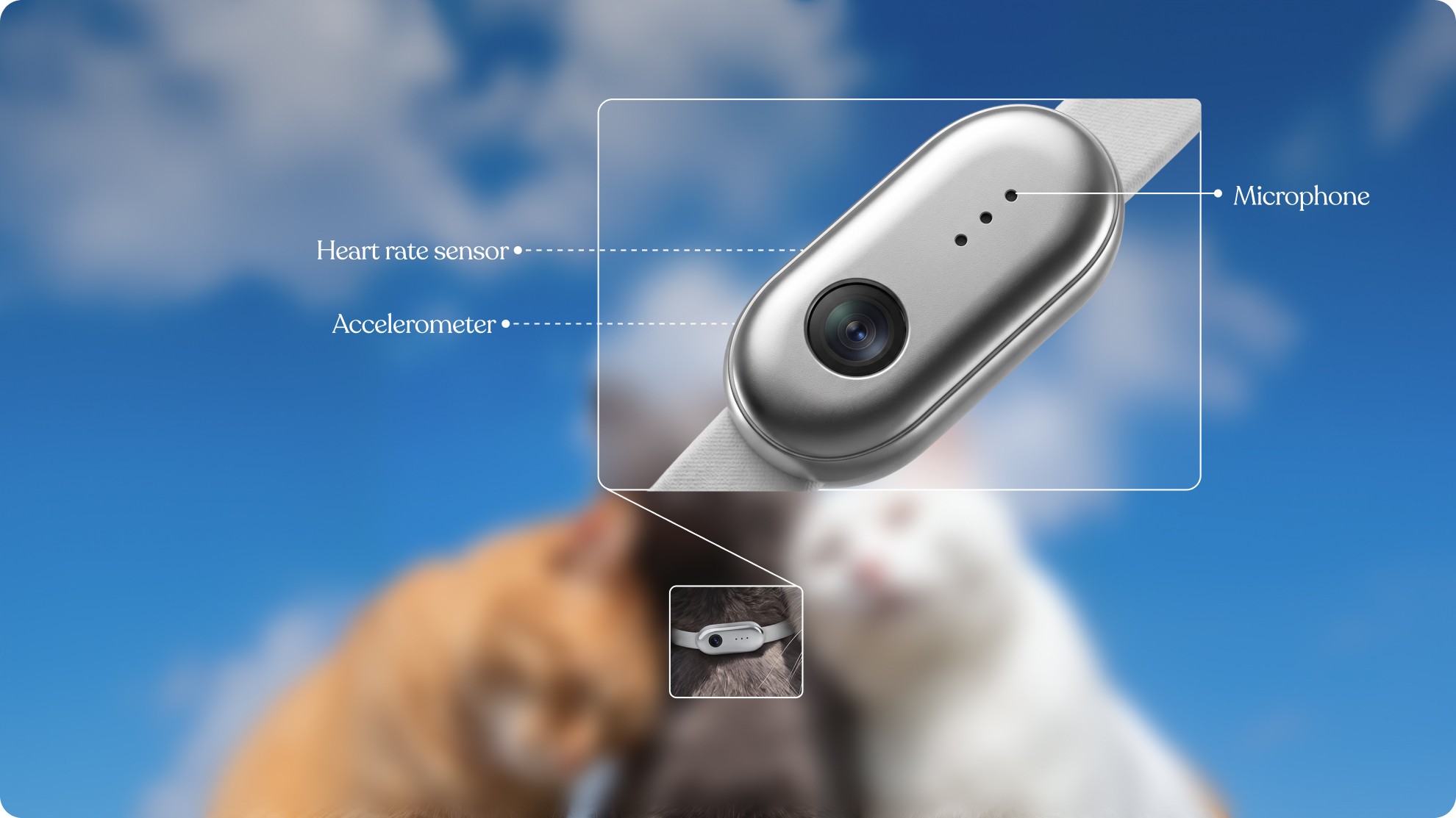
It uses acoustic heart rate sensing at the throat (to work through fur), an accelerometer, a microphone.
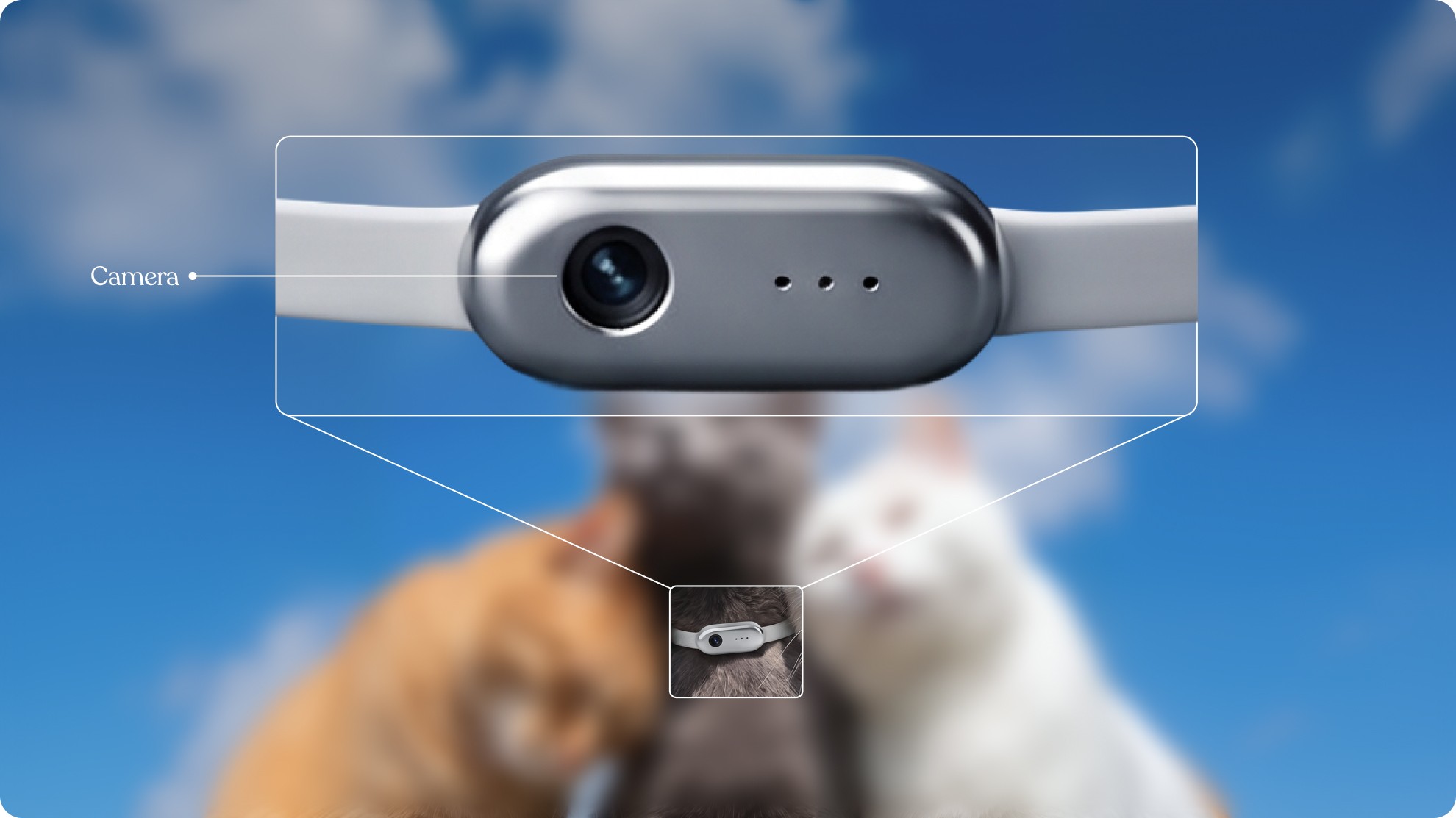
And then there’s the camera, mounted at the collar, it offers the cat’s point of view.
Companion app
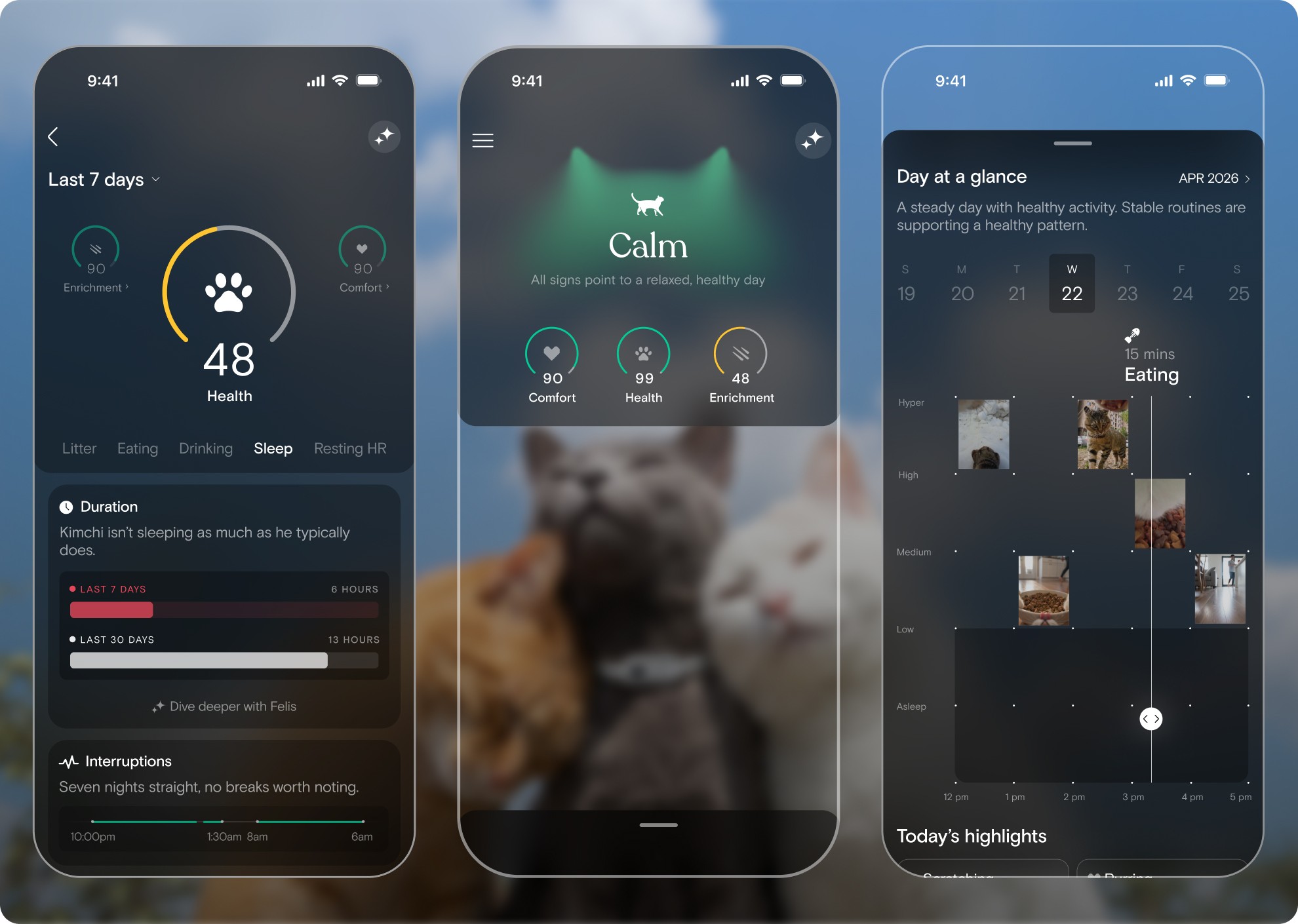
Felis takes a radical approach. it begins with your cat's perspective. The live PoV feed puts you inside their world, paired with a single word that captures how they're doing in that moment.
Beneath that, three scores: Comfort, Health, and Enrichment, give a complete picture of how your cat is truly doing.
Until now, there's been no way to track these behaviors consistently: whether your cat is playing less than last week, grooming more than usual, or avoiding a space they used to love. These subtle shifts often signal health concerns before they become urgent, transforming reactive care into preventative care.
It is built around a journal timeline, a horizontal scrubber that turns an entire day of behavioral data into something you can read at a glance.
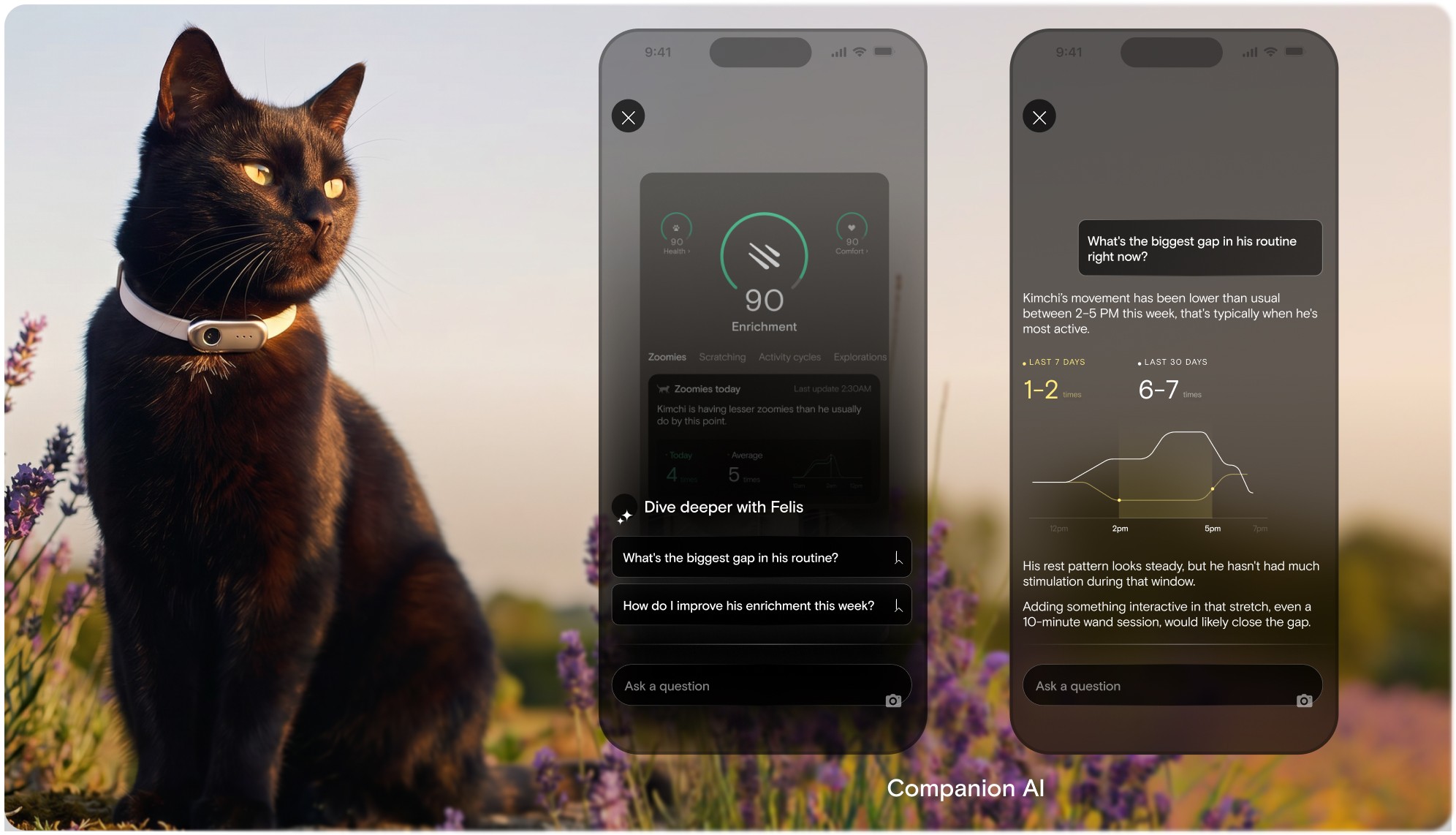
Companion AI
It sits on top of the sensor data. It is not a general AI reasoning from what cats are typically like. It is reasoning from your cat — months of their specific patterns, their normal range of motion, their usual sleep cycles. It knows when the honest answer is: this needs a vet.
Signal architecture
It processes 11 raw sensor signals into 12 behavioral classifications across three confidence tiers, which resolve into three wellness scores: Health, Comfort, and Enrichment.
The system is activated only on movement, processed locally, and never leaves the device or app.
Impact
User testing with pet owners consistently surfaced two responses:
Relief at having continuous context rather than episodic snapshots
Trust in the AI's restraint, the fact that it didn't overclaim made users more likely to act on what it did say.
The deeper impact is structural.
By shifting the interaction model from reactive to ambient, Felis changes what "noticing" means for pet parents.
Takeaway
Felis does not solve grief. If something happens to your cat, no amount of sensor data will make that easier. I know this personally, Kimchi, my ginger tabby, is the reason this project exists.
What Felis solves is the specific, preventable pain of not knowing. Of finding out too late that the information was always there, just not in a form anyone could read.
The design principle I keep returning to: the most trustworthy AI systems are the ones that know what they don't know.
Felis was designed around a "never claim" list, a deliberate set of constraints on what the system would say. That restraint is not a limitation. It's what makes the system honest enough to be useful.