Designing A Wearable Glove for Nonverbal Presence
Interaction Design
A heartbeat-sensing glove and a bedside lamp that lets long-distance pairs feel each other's presence without screens, notifications, or input.
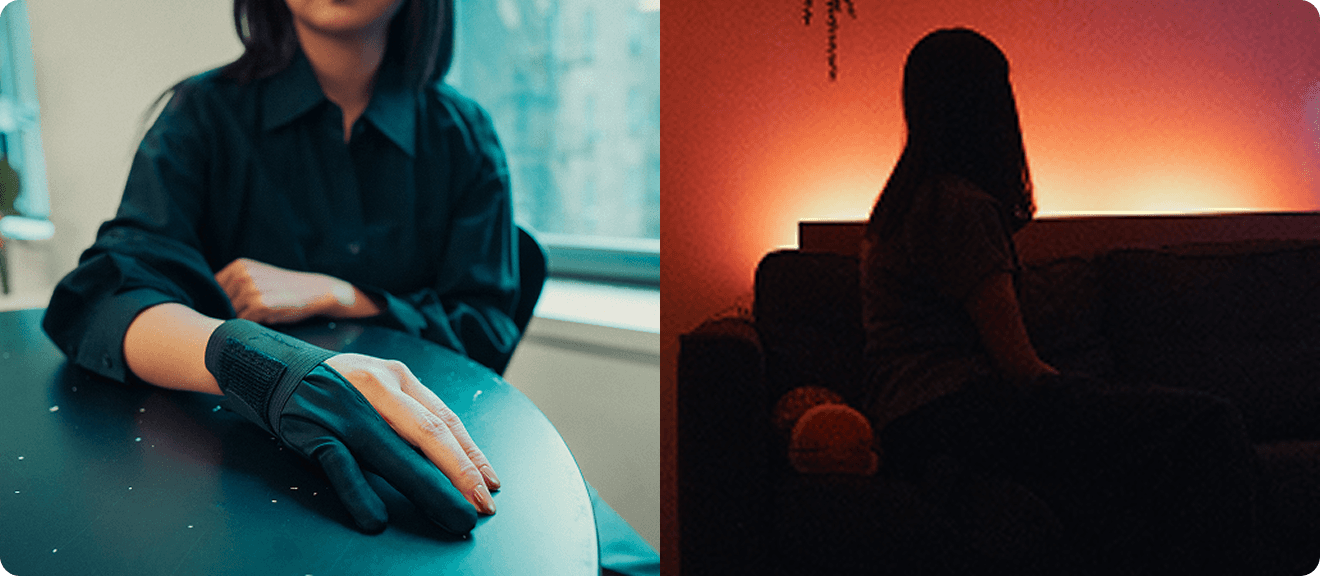
"Every night, millions of people reach for their phones just to confirm someone they love is still there."
Problem Statement
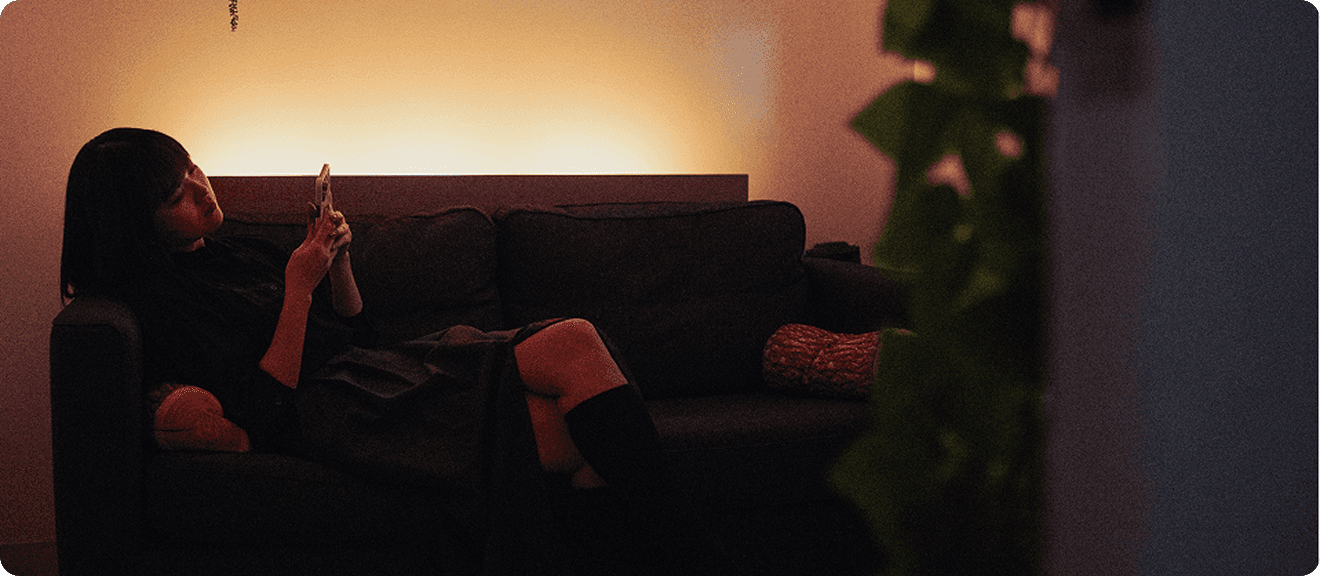
Adults wrestle with separation anxiety too: endless doom-scroll checks, midnight "just text me when you're home" pings.
Existing products in this space, Bond Touch bracelets, Filimin friendship lamps, Hey bracelets, rely on manual "I'm thinking of you" taps, which require conscious action and lose emotional fidelity.
Research & Validation
Six semi-structured interviews with 4 psychotherapists and 2 clinical psychologists surfaced three key insights.
Tangible heartbeat feedback calms separation anxiety.
Therapists confirmed that rhythmic, body-linked stimuli (like a heartbeat) activate co-regulation responses, the same mechanism that makes a parent's chest soothe an infant.
Over-reliance risks tech dependency and panic on failure.
If the lamp goes offline, a user in an anxious state could spiral. The system needed graceful degradation and clear "offline" states that don't trigger alarm.
"A heartbeat is the first sound we ever associate with safety. If you can bring that into someone's environment, you're not just reducing anxiety, you're reactivating a primal sense of co-regulation."
Design Iterations
The Glove
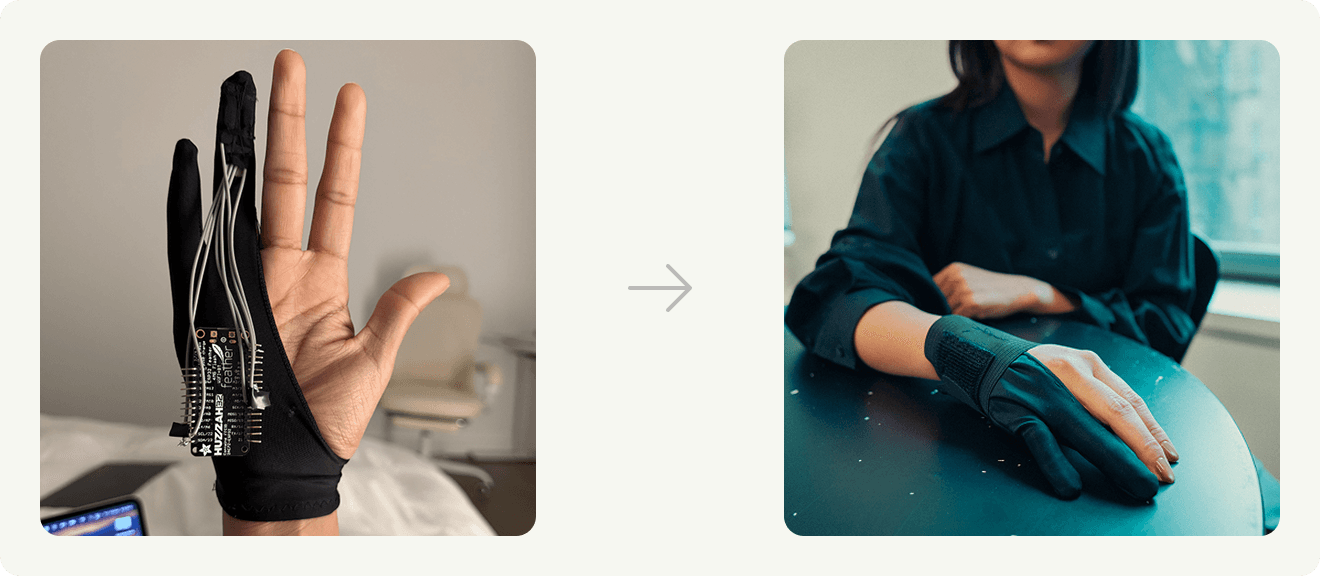
Initial Concept: The first version had exposed wires and a breadboard-mounted sensor. Functional, but clinical.
Feedback: Users found it uncomfortable, and the visible electronics felt fragile and intimidating.
Revision: We moved to a stretchy glove with a soft felt lining, testing it across eight finger sizes to ensure consistent sensor contact.
The Lamp
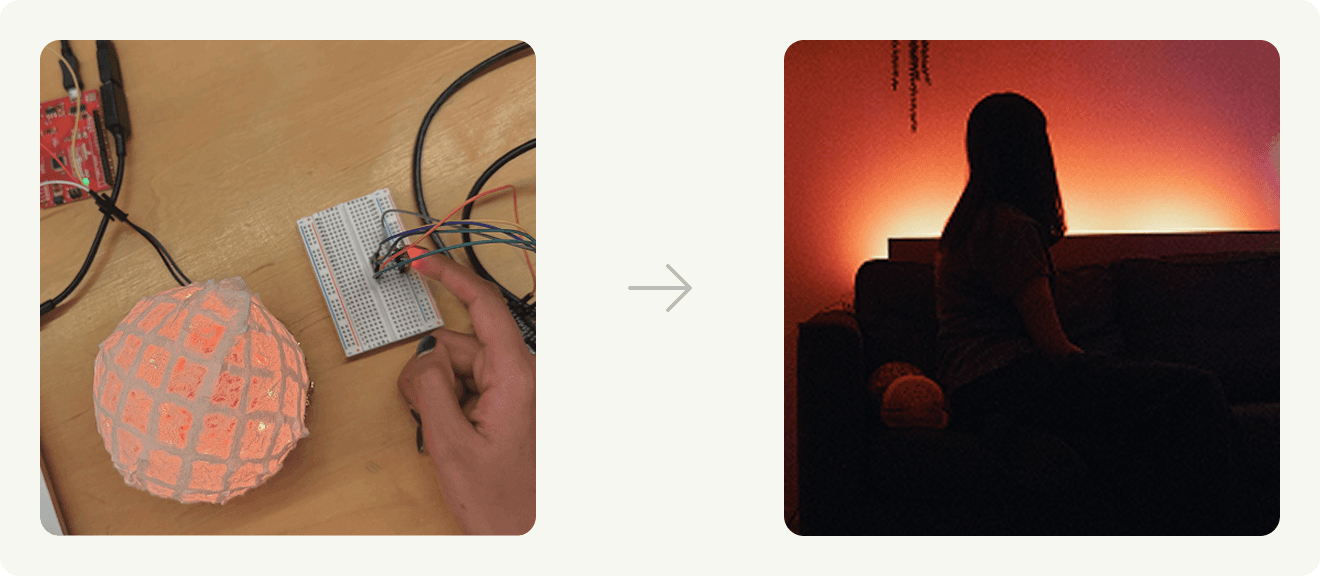
Initial Concept: The initial lamp design with a lattice pattern.
Feedback: It landed as novelty décor. Users called it cute, but it didn't read as calming and didn't communicate its emotional purpose.
Revision: Switching to a semi-circular MDF arc with a gradient diffuser that simulates a setting sun shifted perception immediately, from gadget to ambient object.
The Diffuser
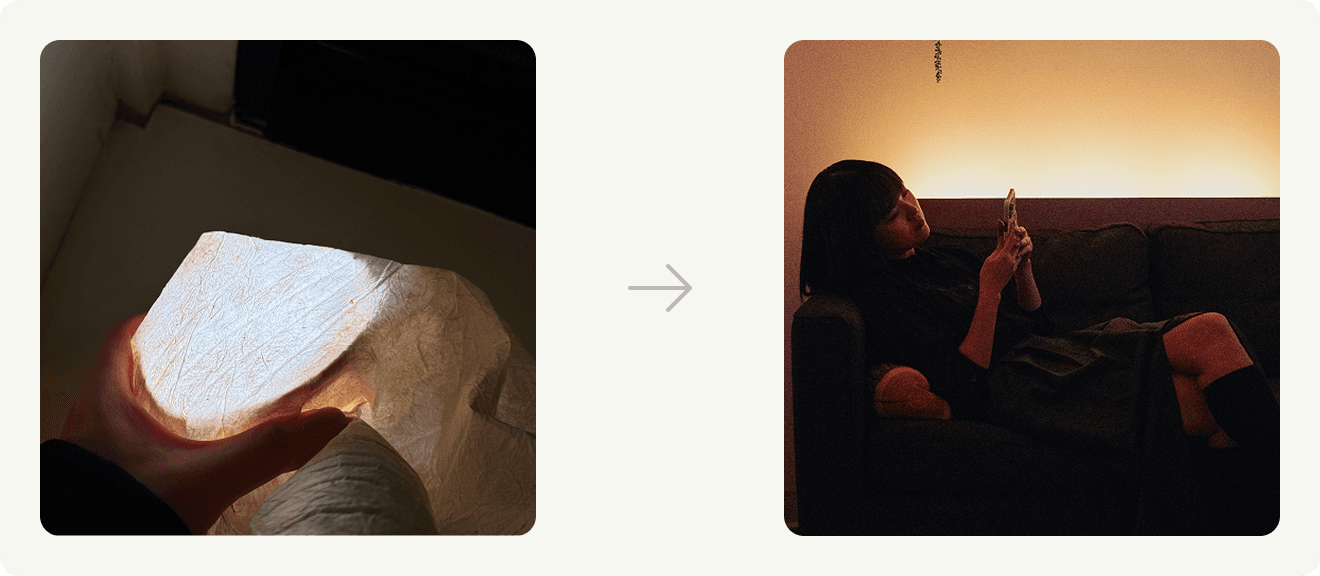
Initial Concept: Holographic film behind the diffuser for visual drama.
Observation: It produced hotspots and 1,200 lux at 30 cm, the opposite of calming.
Revision: We replaced it with frosted acrylic layered with tracing paper, bringing the output to a sub-300 lux breathing glow that participants consistently preferred over any flashier biometric visualization.
Exhibition Design
At the December 2024 SVA ixD exhibition, we split the gallery into two mirror zones, "Brooklyn" and "Bangalore", to dramatize the lamp's promise of collapsing distance. Visitors wore the glove in one zone and watched the lamp respond in the other.
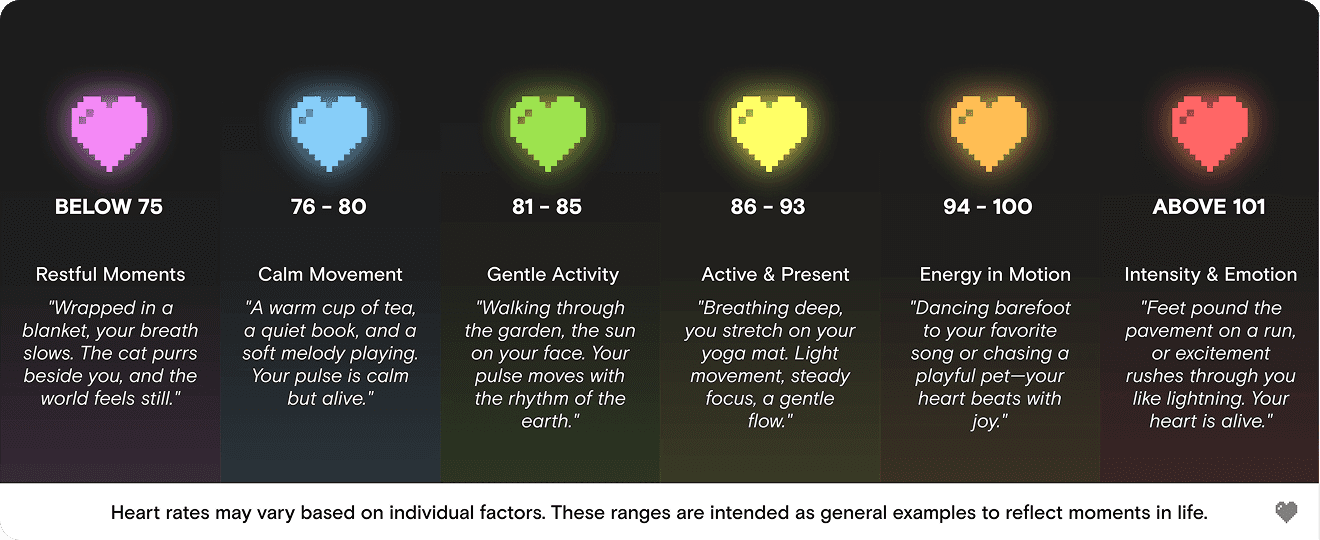
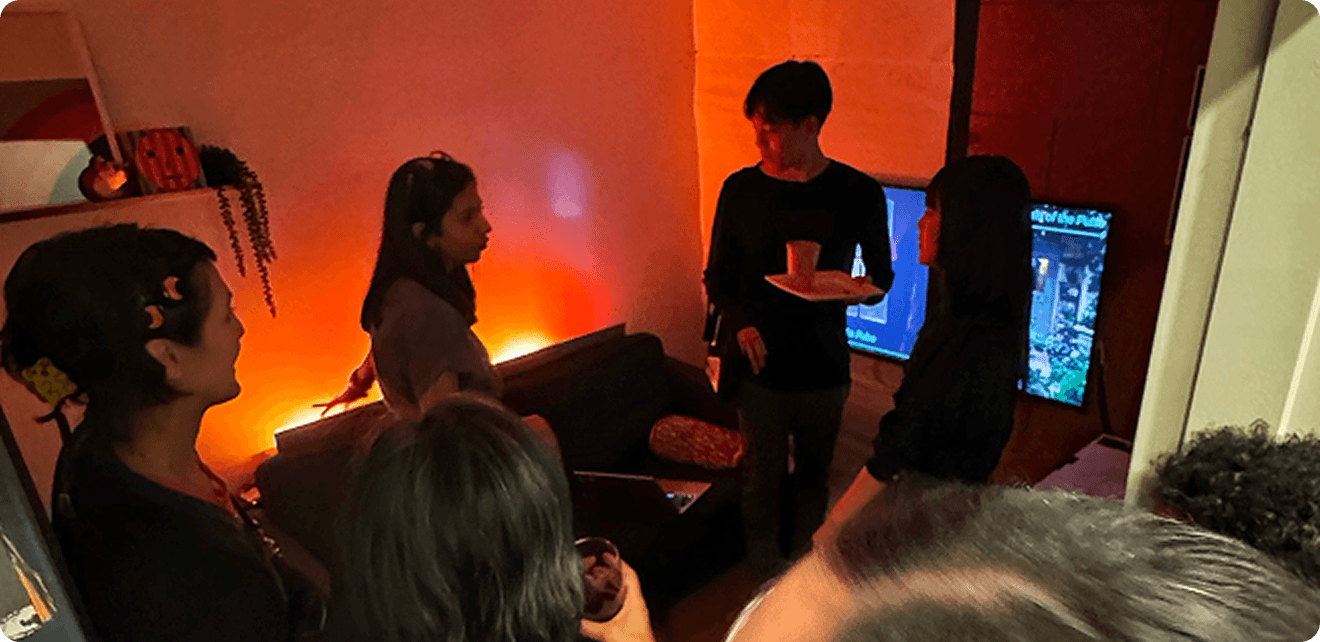
"For thirty seconds I forgot it was a lamp. It just felt like someone was in the room with me."
— Exhibition visitor
If We Had More Time
Companion app for onboarding and pause controls.
Currently, pausing requires physically removing the glove. A lightweight mobile interface would support the "opt-in vulnerability" principle and give users agency without adding monitoring features.Multi-person support.
Several parent participants asked about connecting to multiple children's lamps. This raises interesting design questions about how to differentiate multiple heartbeats in a single ambient display without creating a dashboard.Graceful offline storytelling. The current "fade out" when connection drops is functional but could be more intentional. What if the lamp slowly shifted to a "memory" glow, the last recorded rhythm, gently fading, rather than simply dimming?