Building Trust in Digital Taxation for 4 Million Indonesian Smallholder Farmers
Building Trust in Digital Taxation for 4 Million Indonesian Smallholder Farmers
Building Trust in Digital Taxation for 4 Million Indonesian Smallholder Farmers
Role
Lead Product Designer
Company
Jiva Agriservices
Timeline
18 months (June 2022 – December 2023)
Team
1 Product Designer (me), 1 UX Writer, 1 Product Manager, 2 UX Researchers, 3 Engineers, Finance Lead, Training Team
Problem
Problem
New tax regulations required deductions from farmer income inside a platform they already approached with limited trust
New tax regulations required deductions from farmer income inside a platform they already approached with limited trust
Solution
Solution
A multi-layered transparency system that introduced tax deductions gradually across 4 physical and digital touch points
A multi-layered transparency system that introduced tax deductions gradually across 4 physical and digital touch points
Impact
Impact
The system averted IDR 282.97M in total tax liability across the farmer base, saved farmers an average of IDR 187.4K each, and drove NPWP registration to 58.7% of users.
The system averted IDR 282.97M in total tax liability across the farmer base, saved farmers an average of IDR 187.4K each, and drove NPWP registration to 58.7% of users.
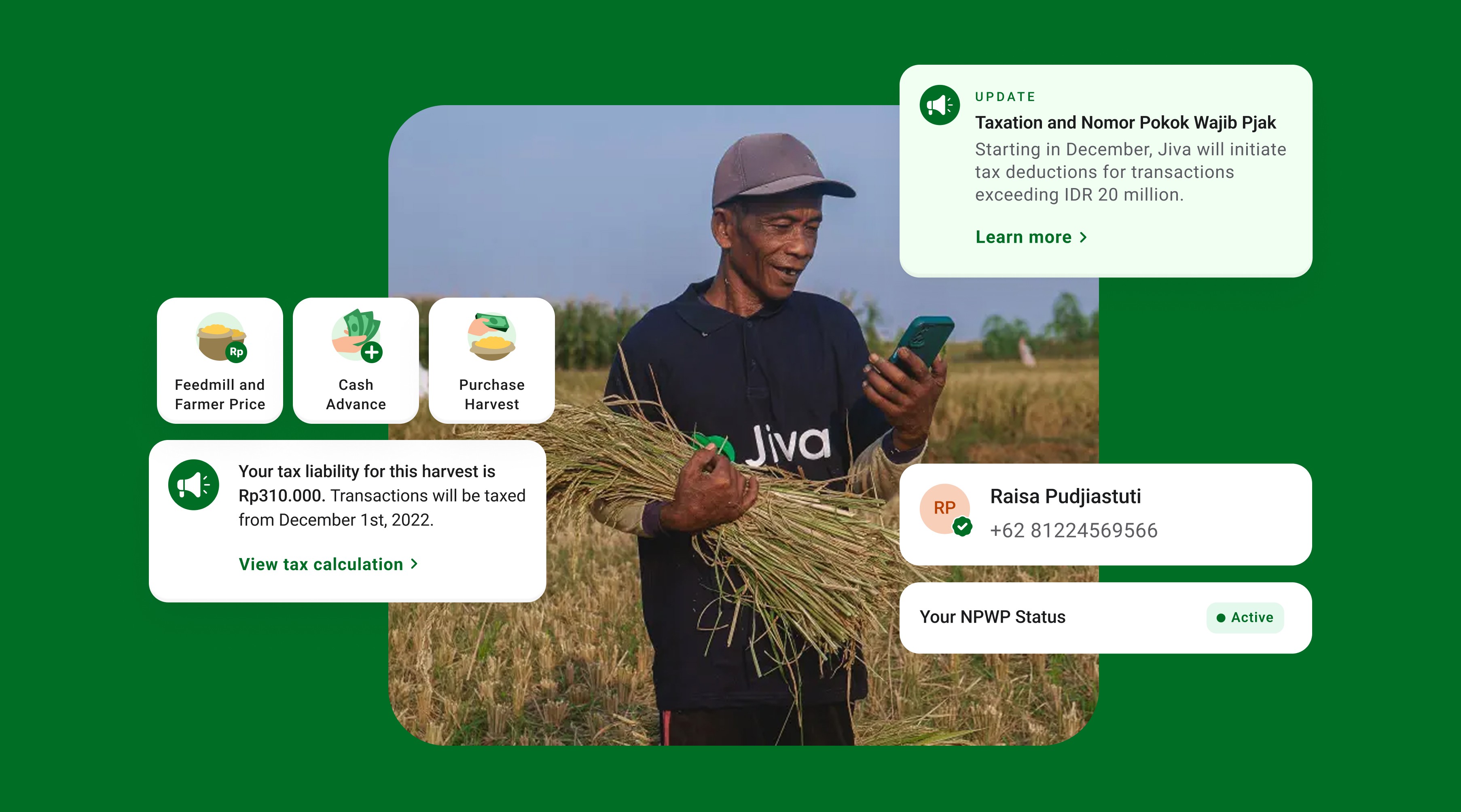
In 2022, new Indonesian tax regulations shifted responsibility for tax payments on transactions above IDR 20 million from digital platforms to individual farmers. For Jiva, this introduced regulatory and financial risk. For farmers, it introduced something more personal: tax deductions that would directly reduce their income.
Smallholder farmers in Indonesia, like most people, approach digital financial systems with natural caution, especially when money is being taken rather than given. Any surprise deduction, any unexplained calculation, any moment of confusion risked breaking the trust Jiva had worked to build.
In 2022, new Indonesian tax regulations shifted responsibility for tax payments on transactions above IDR 20 million from digital platforms to individual farmers.
For Jiva, this introduced regulatory and financial risk. For farmers, it introduced something more personal: tax deductions that would directly reduce their income.
Smallholder farmers in Indonesia, like most people, approach digital financial systems with natural caution, especially when money is being taken rather than given. Any surprise deduction, any unexplained calculation, any moment of confusion risked breaking the trust Jiva had worked to build.
In 2022, new Indonesian tax regulations shifted responsibility for tax payments on transactions above IDR 20 million from digital platforms to individual farmers. For Jiva, this introduced regulatory and financial risk. For farmers, it introduced something more personal: tax deductions that would directly reduce their income.
Smallholder farmers in Indonesia, like most people, approach digital financial systems with natural caution, especially when money is being taken rather than given. Any surprise deduction, any unexplained calculation, any moment of confusion risked breaking the trust Jiva had worked to build.
Research phase
Research phase
Research phase
Before designing, I worked with our research team to understand how farmers perceived taxes, NPWP status, and digital deductions.
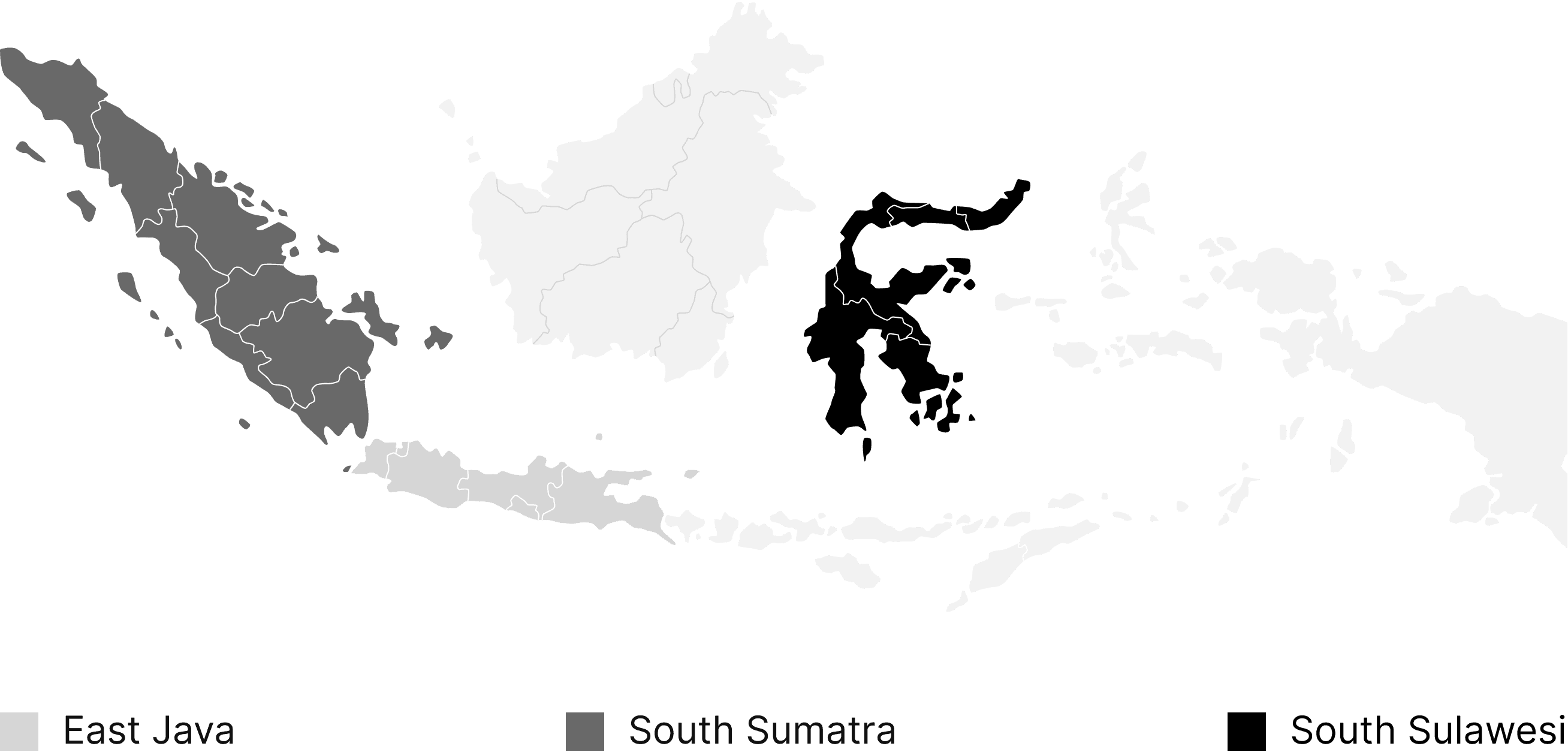
We conducted 20 semi-structured interviews across three regions: East Java, South Sumatra, and South Sulawesi.
Before designing, I worked with our research team to understand how farmers perceived taxes, NPWP status, and digital deductions.
We conducted 20 semi-structured interviews across three regions: East Java, South Sumatra, and South Sulawesi.
Through field visits, usability tests, and in-depth interviews, farmers repeatedly voiced three significant challenges.
Confusion about how taxes were calculated, the legal jargon was overwhelming.
Skepticism toward digital financial tools, they feared hidden costs.
Struggles with navigating the UI, important tax information was overlooked.
Participants were recruited through our field team and represented a range of transaction volumes (under IDR 20M/month to over IDR 1B/month).
Sessions were conducted in-person in Bahasa Indonesia, with simultaneous translation for the design team.
Participants were recruited through our field team and represented a range of transaction volumes (under IDR 20M/month to over IDR 1B/month).
Sessions were conducted in-person in Bahasa Indonesia, with simultaneous translation for the design team.
Through field visits, usability tests, and in-depth interviews, farmers repeatedly voiced three significant challenges.
Confusion about how taxes were calculated, the legal jargon was overwhelming.
Skepticism toward digital financial tools, they feared hidden costs.
Struggles with navigating the UI, important tax information was overlooked.
Key findings
Key findings
Key findings
Legal language failed in practice.
Legal language failed in practice.

Farmers skimmed or ignored legal terminology entirely. Long-form policy explanations were not read.
Farmers skimmed or ignored legal terminology entirely. Long-form policy explanations were not read.
Calculation logic mattered more than policy.
Calculation logic mattered more than policy.
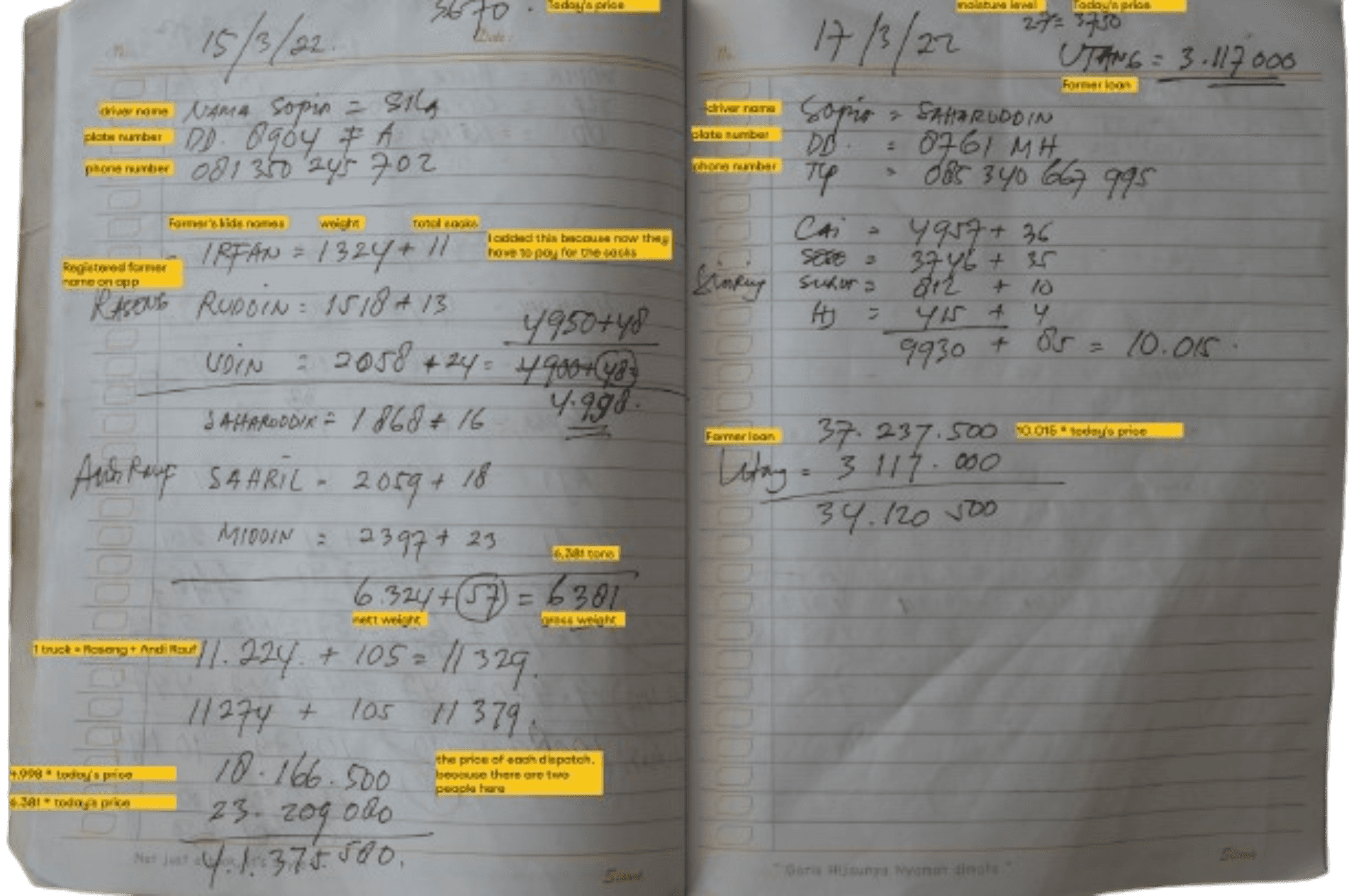
Farmers wanted to understand how a number was derived, not why the policy existed.
Farmers wanted to understand how a number was derived, not why the policy existed.
NPWP status was poorly understood.
NPWP status was poorly understood.

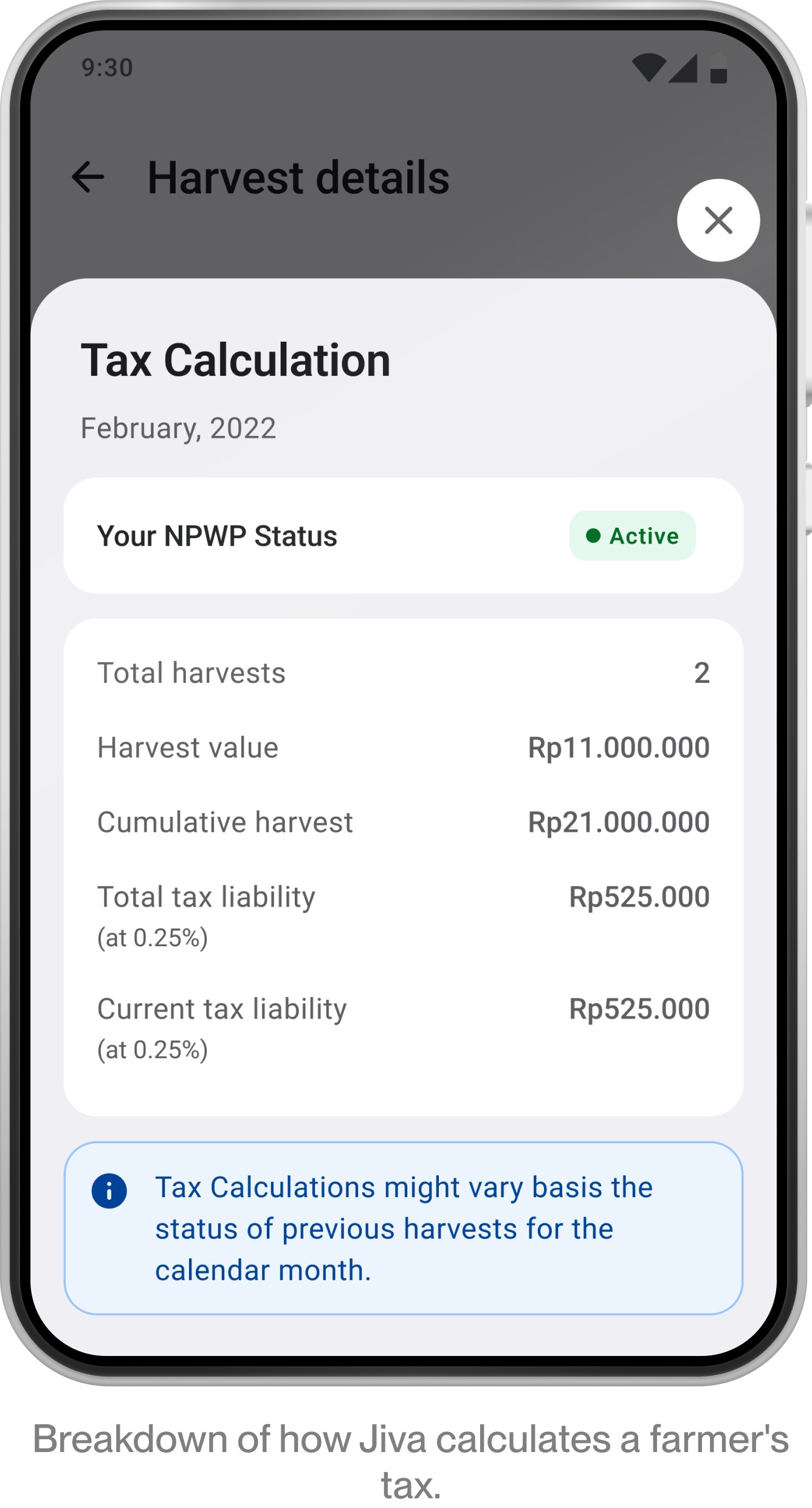
Many farmers didn't realize that an inactive or missing NPWP doubled their tax rate (0.5% vs. 0.25%) but the information had never reached them in actionable form.
Many farmers didn't realize that an inactive or missing NPWP doubled their tax rate (0.5% vs. 0.25%) but the information had never reached them in actionable form.
Peer explanation > Institutional messaging.
Peer explanation > Institutional messaging.
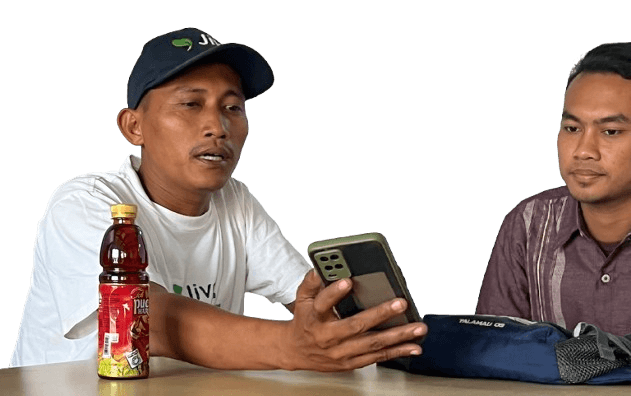
Farmers expressed greater confidence when information came from other farmers.
Farmers expressed greater confidence when information came from other farmers.
Design Principles
Design Principles
No surprises
No surprises
Tax deductions should never appear without prior context.
Tax deductions should never appear without prior context.
Explain the math
Explain the math
Show calculation logic, not just final numbers. Let farmers verify for themselves.
Show calculation logic, not just final numbers. Let farmers verify for themselves.
Meet farmers in-flow
Meet farmers in-flow
Embed understanding into transactional moments.
Embed understanding into transactional moments.
Use familiar voices
Use familiar voices
Supplement platform messaging with peer explanation. Trust transfers through people, not interfaces.
Supplement platform messaging with peer explanation. Trust transfers through people, not interfaces.
The Solution.
A Transparency System
The Solution.
A Transparency System
The Solution.
A Transparency System
We designed a multi-layered transparency system that introduced tax deductions gradually and predictably across four touchpoints.
We designed a multi-layered transparency system that introduced tax deductions gradually and predictably across four touchpoints.
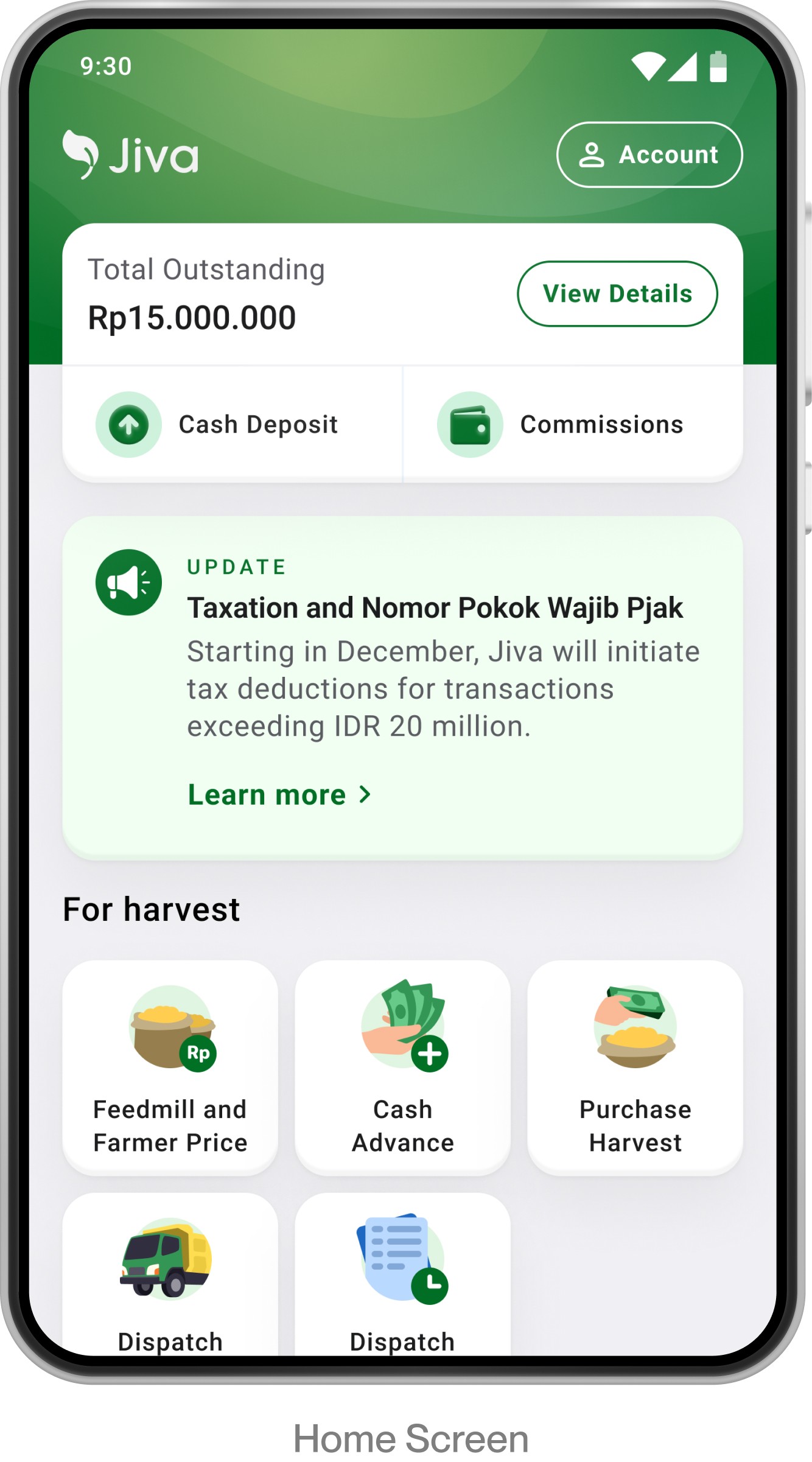
Advance Awareness: Home Screen Banner
Design goal: Signal upcoming changes before deductions begin.
Designed a persistent banner for the home screen that appeared 30 days before tax enforcement began.
Advance Awareness: Home Screen Banner
Design goal: Signal upcoming changes before deductions begin.
Designed a persistent banner for the home screen that appeared 30 days before tax enforcement began.
2. Deep Understanding: Knowledge Base
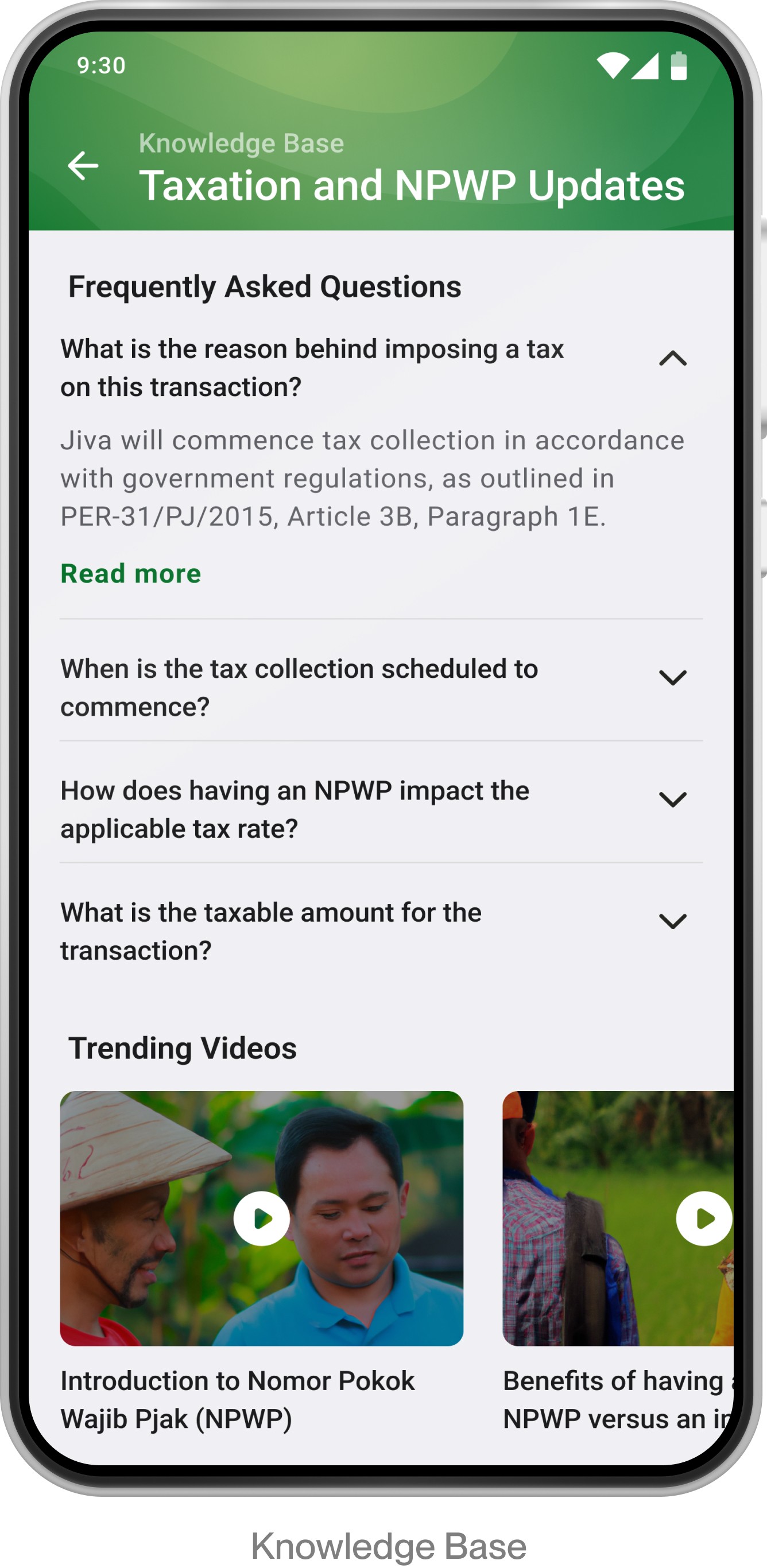
Design goal: Provide exhaustive and verifiable explanation for farmers who wanted to go deeper.
I designed a dedicated knowledge base section with three content types:
Plain-language explainers
We rewrote policy documentation into conversational Bahasa Indonesia, removing all legal jargon.Peer explanation videos
Based on the research finding that farmers trusted other farmers, we produced short videos featuring farmers explaining tax implications in their own words.
2. Deep Understanding: Knowledge Base
Design goal: Provide exhaustive and verifiable explanation for farmers who wanted to go deeper.
I designed a dedicated knowledge base section with three content types:
Plain-language explainers
We rewrote policy documentation into conversational Bahasa Indonesia, removing all legal jargon.Peer explanation videos
Based on the research finding that farmers trusted other farmers, we produced short videos featuring farmers explaining tax implications in their own words.
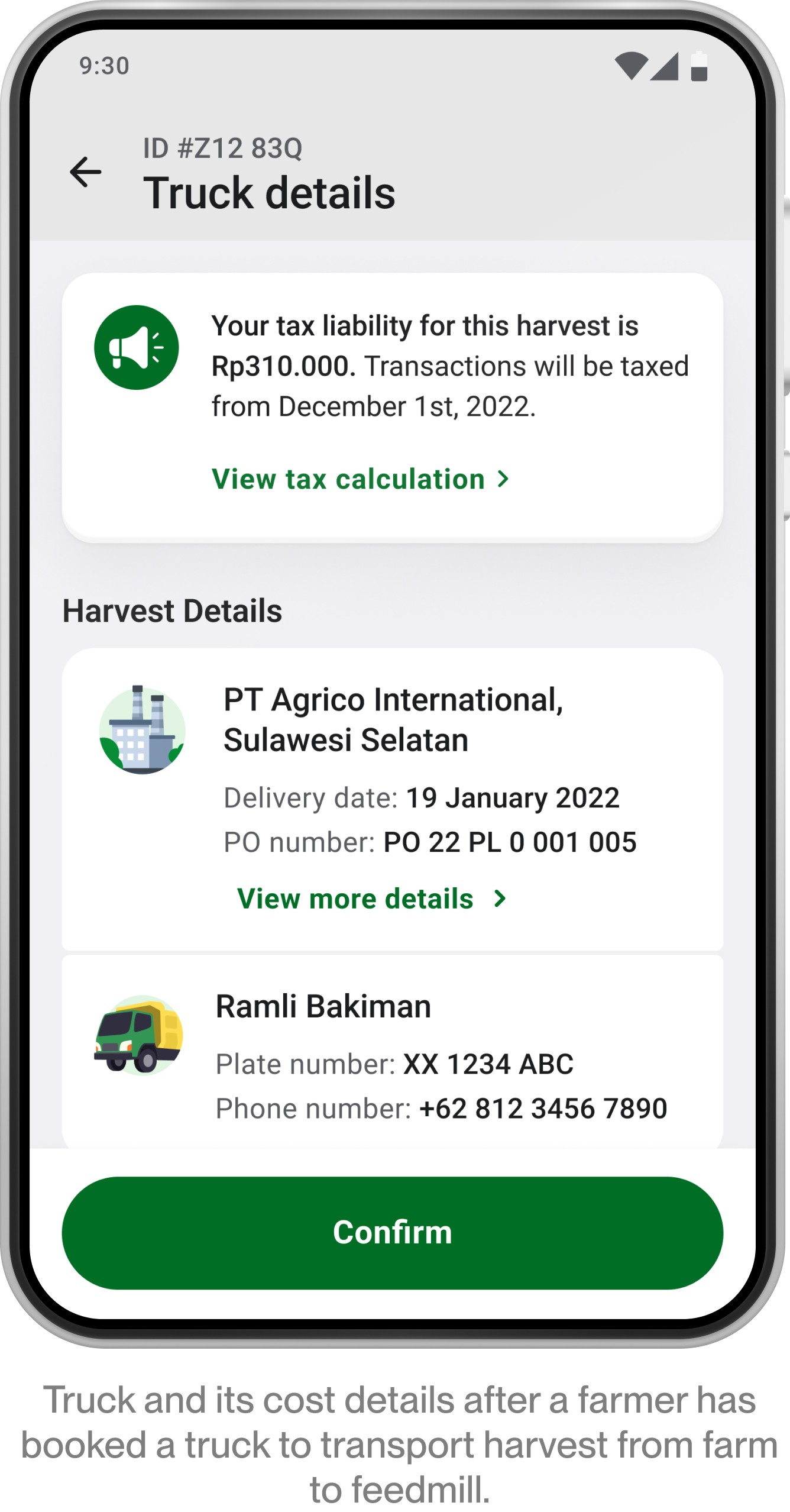
Contextual Nudges: Transactional Flows
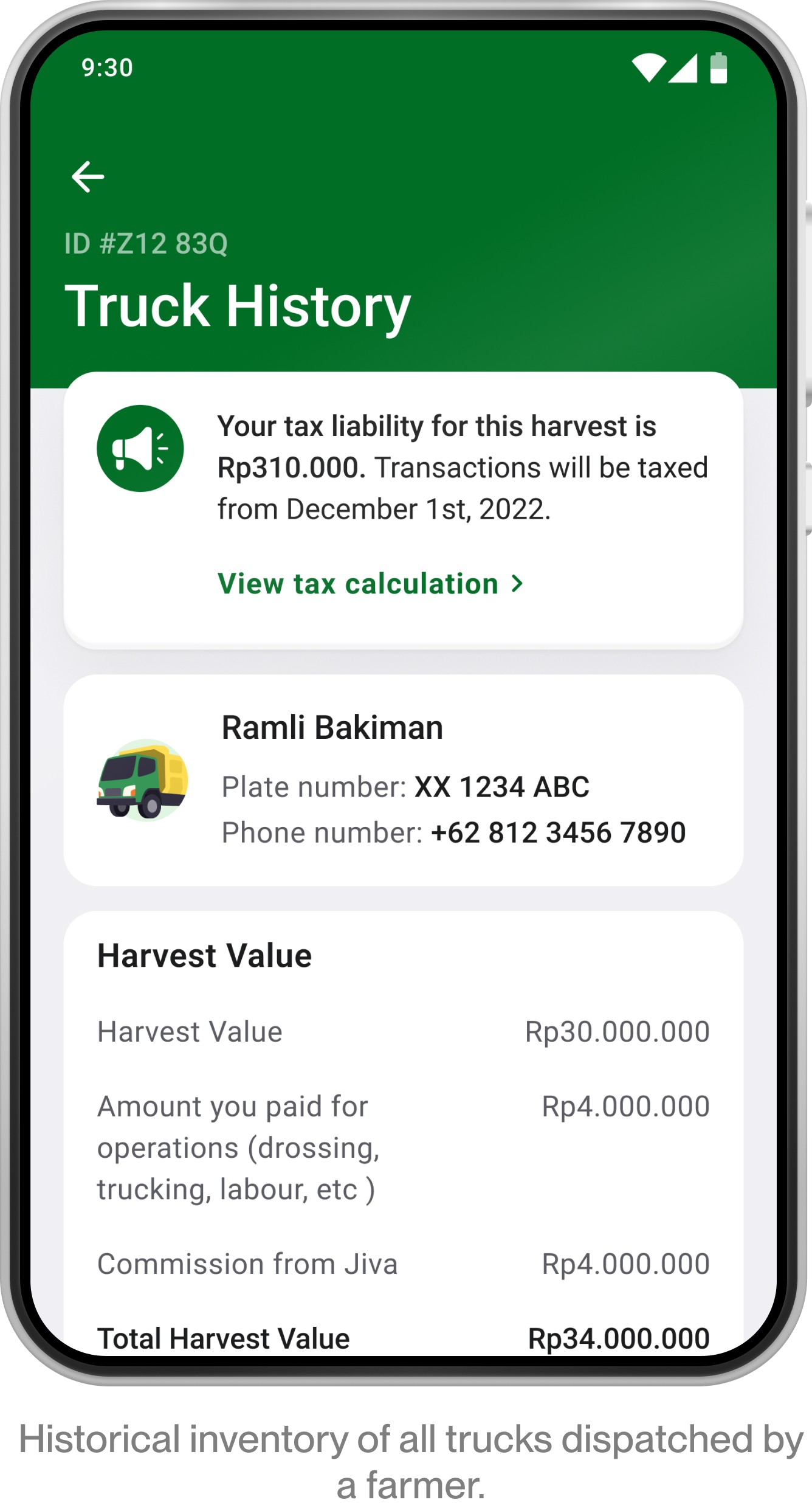
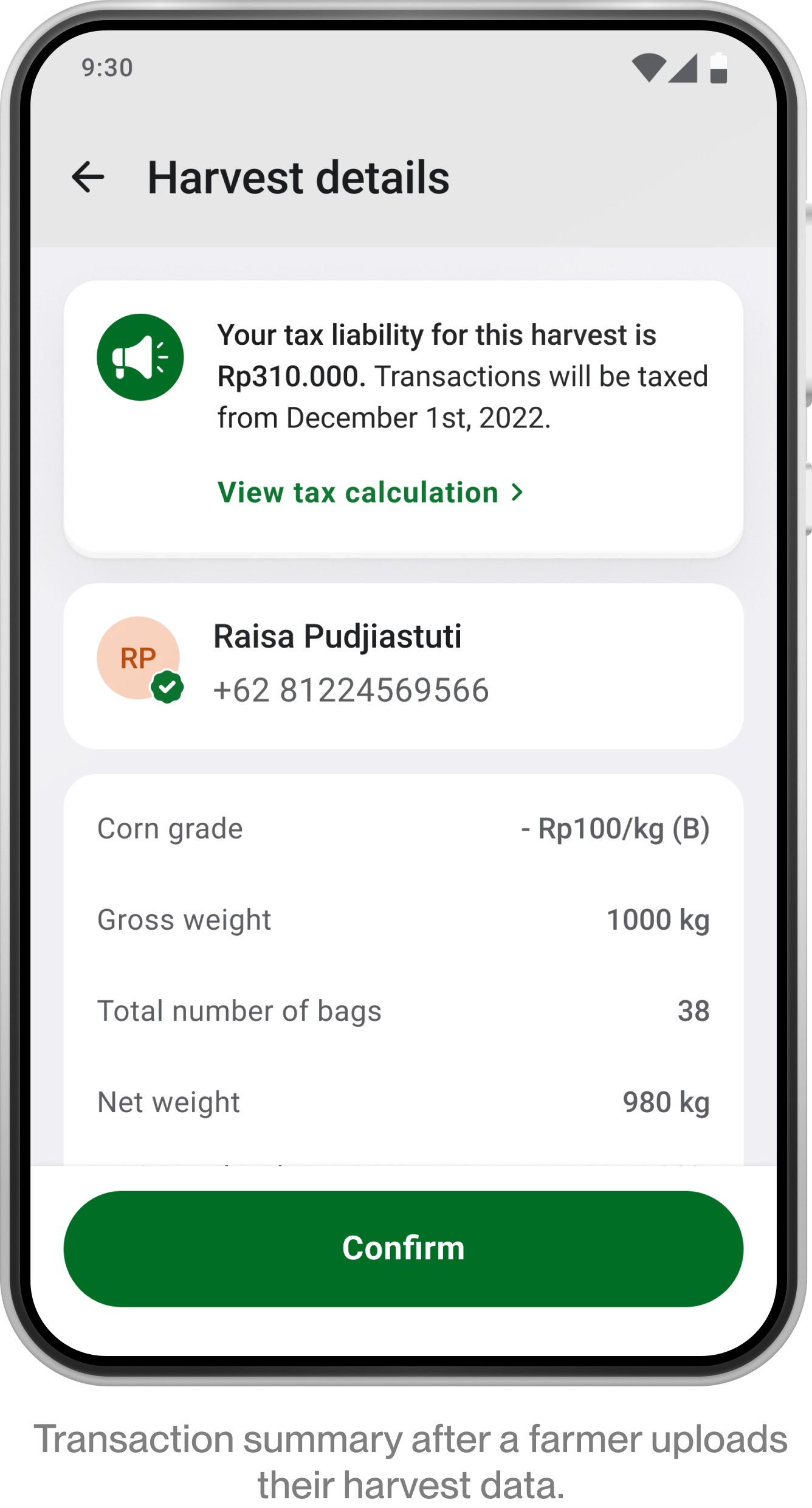
Design goal: Reinforce understanding at the moment of decision.
I mapped every flow where tax deductions would eventually appear:
Truck booking confirmation
Cost breakdown screens
Historical transaction records
Payment receipt screens
For each, we designed contextual banners that appeared before the deduction was shown, not after.
Contextual Nudges: Transactional Flows
Design goal: Reinforce understanding at the moment of decision.
I mapped every flow where tax deductions would eventually appear:
Truck booking confirmation
Cost breakdown screens
Historical transaction records
Payment receipt screens
For each, we designed contextual banners that appeared before the deduction was shown, not after.
Beyond the Interface: Rollout Support
Beyond the Interface: Rollout Support
Beyond the Interface: Rollout Support
Trust couldn't be built through UI alone.
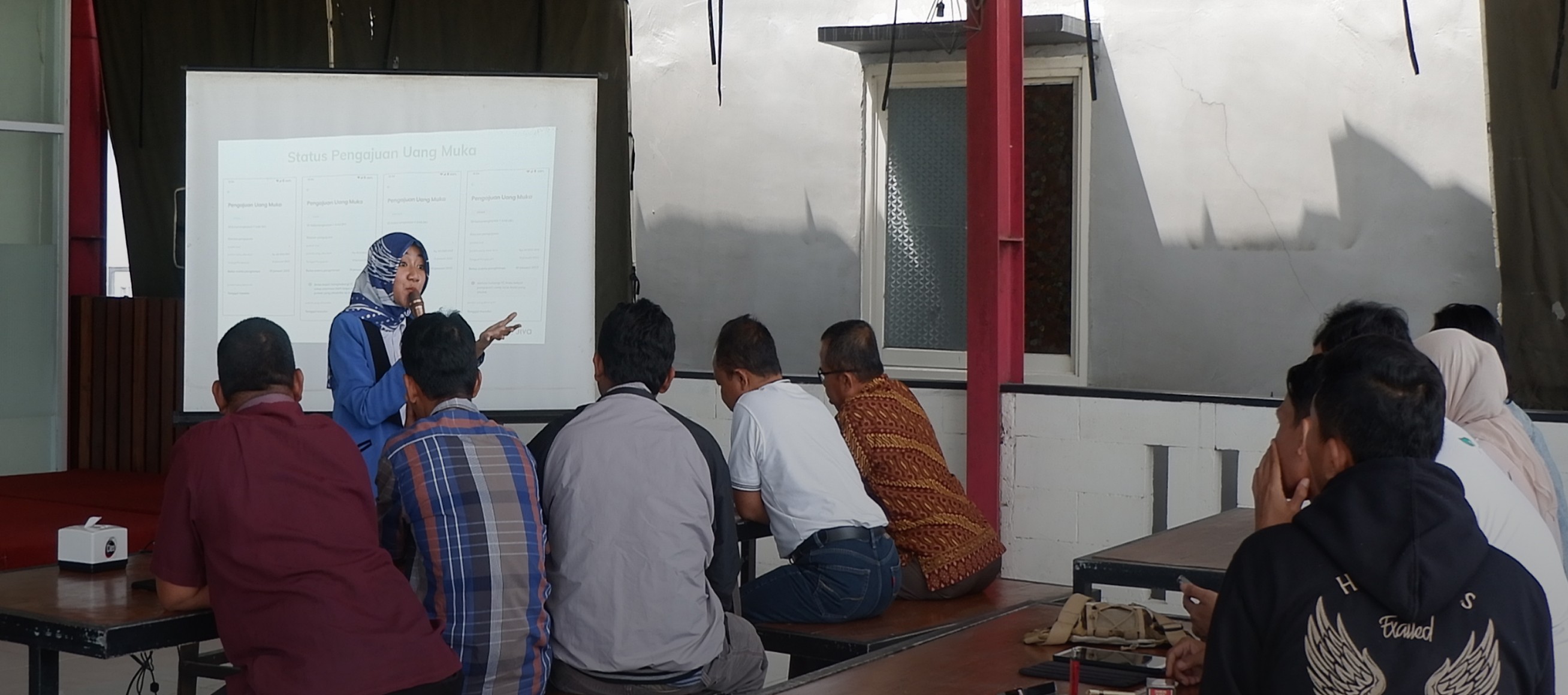
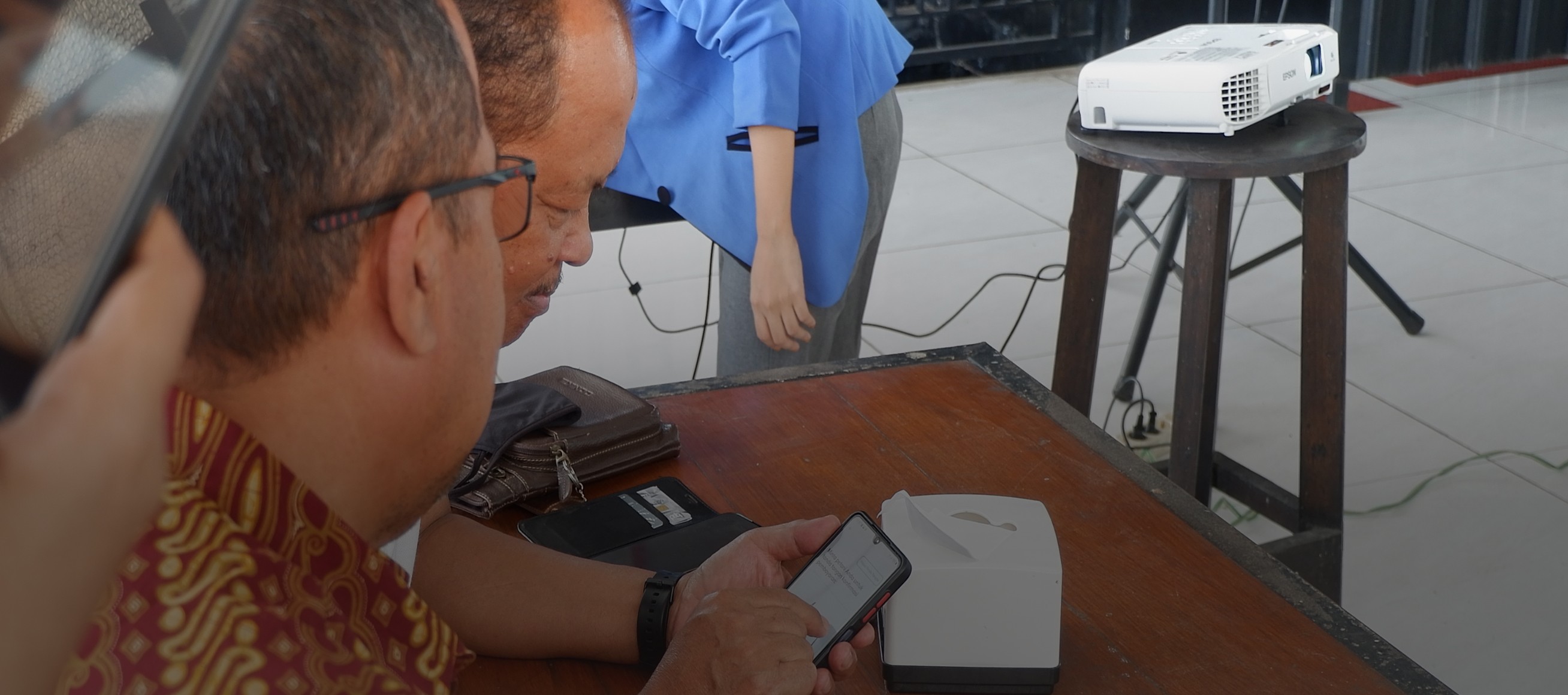
I traveled with the training team to conduct in-person sessions in three regions.
These sessions:
Introduced the new tax system in person before it appeared in-app.
Walked through calculation examples using the same logic as the product.
Created space for questions that wouldn't surface through a screen.
Farmers could practice the mental model before encountering real deductions.
This wasn't traditional "design work," but it was essential to the outcome.
The interface and the training operated as a single system.
Trust couldn't be built through UI alone.
I traveled with the training team to conduct in-person sessions in three regions.
These sessions:
Introduced the new tax system in person before it appeared in-app.
Walked through calculation examples using the same logic as the product.
Created space for questions that wouldn't surface through a screen.
Farmers could practice the mental model before encountering real deductions. This wasn't traditional "design work," but it was essential to the outcome.
The interface and the training operated as a single system.
Trust couldn't be built through UI alone.
I traveled with the training team to conduct in-person sessions in three regions.
These sessions:
Introduced the new tax system in person before it appeared in-app.
Walked through calculation examples using the same logic as the product.
Created space for questions that wouldn't surface through a screen.
Farmers could practice the mental model before encountering real deductions.
This wasn't traditional "design work," but it was essential to the outcome.
The interface and the training operated as a single system.
The Impact
The Impact
The Impact
Total tax liability averted for farmers
IDR 282.97M
Average tax saved per liable farmer
IDR 187.4K
NPWP penetration across farmer base
58.7%
These metrics were tracked in collaboration with finance and operations teams post-implementation.
Total tax liability averted for farmers
IDR 282.97M
Average tax saved per liable farmer
IDR 187.4K
NPWP penetration across farmer base
58.7%
These metrics were tracked in collaboration with finance and operations teams post-implementation.
Total tax liability averted for farmers
IDR 282.97M
Average tax saved per liable farmer
IDR 187.4K
NPWP penetration across farmer base
58.7%
These metrics were tracked in collaboration with finance and operations teams post-implementation.
Reflection
Realistic prototypes are an ethical requirement for financial systems.
When money is involved, users are evaluating trustworthiness. Simplified numbers break that evaluation.
Information hierarchy influences trust more than visual polish.
The difference between a confusing deduction and a clear one often came down to when information appeared and how much context preceded it.
Designing for compliance requires attention to emotional safety.
Legal accuracy isn't enough. Farmers needed to feel confident. That required a different kind of clarity, one that respected the anxiety inherent in seeing income reduced.
Product impact compounds when paired with operational support.
The interface and the training sessions weren't separate workstreams. They were two expressions of the same design intent: help farmers face complexity with confidence.
Reflection
Realistic prototypes are an ethical requirement for financial systems.
When money is involved, users are evaluating trustworthiness. Simplified numbers break that evaluation.
Information hierarchy influences trust more than visual polish.
The difference between a confusing deduction and a clear one often came down to when information appeared and how much context preceded it.
Designing for compliance requires attention to emotional safety.
Legal accuracy isn't enough. Farmers needed to feel confident. That required a different kind of clarity, one that respected the anxiety inherent in seeing income reduced.
Product impact compounds when paired with operational support.
The interface and the training sessions weren't separate workstreams. They were two expressions of the same design intent: help farmers face complexity with confidence.