Over seven weeks, I looked closely at what it means to wear a device that quietly redefines rest, recovery, and the body, and what gets lost when wellness becomes something you can optimize, score, and fail.
Over seven weeks, I looked closely at what it means to wear a device that quietly redefines rest, recovery, and the body, and what gets lost when wellness becomes something you can optimize, score, and fail.
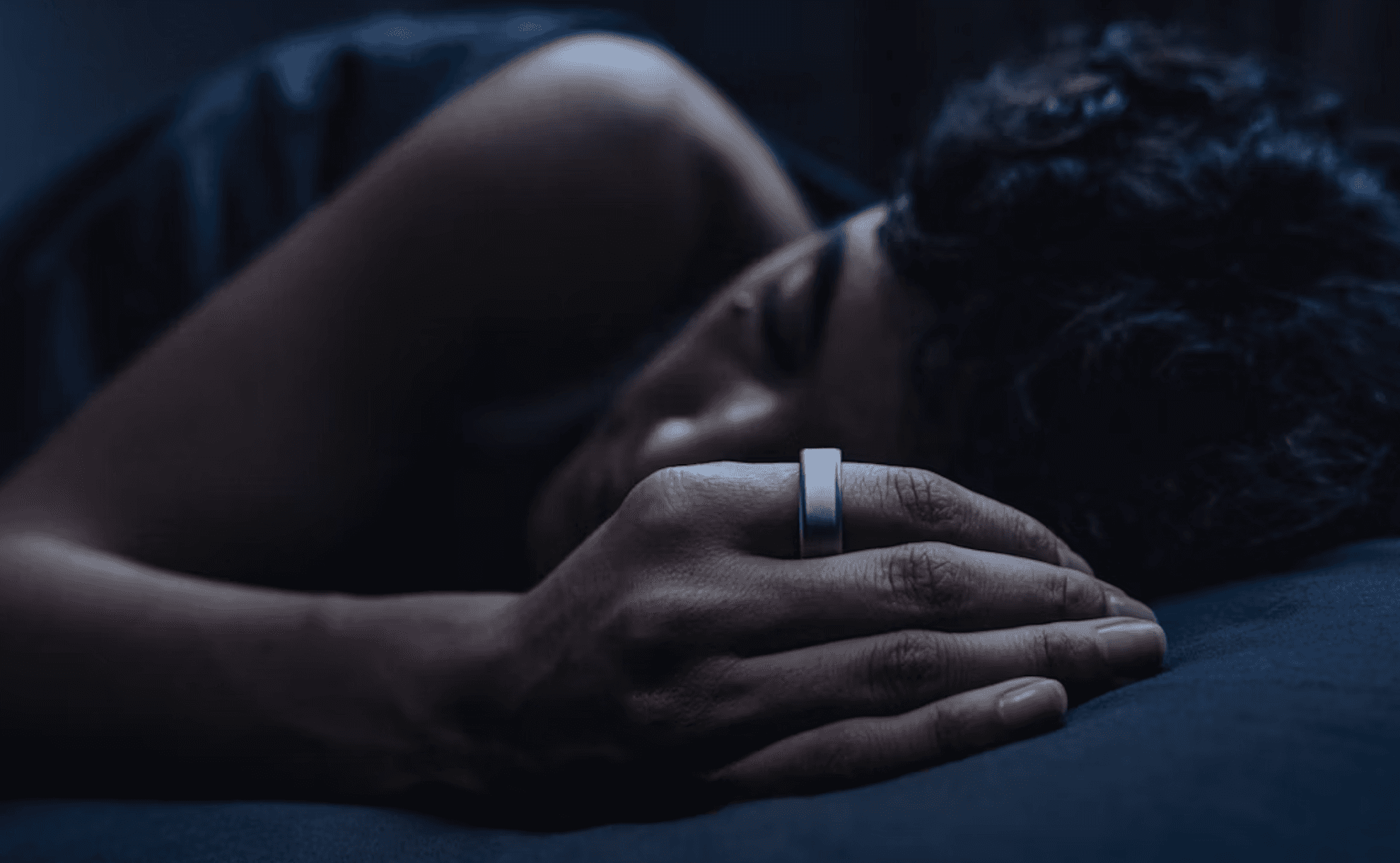
Original product image © Oura. Used for educational analysis.
Original product image © Oura. Used for educational analysis.
Week One
The Wicked Side of Wellness
Wicked Problems & Socio-Technical Systems
Table of Contents
Week One
Wicked Problems & Socio-Technical Systems
The Wicked Side of Wellness
Week Two
From Talisman to Technology
From Talisman to Technology
Interface Metaphor & Symbolic Translation Lens
Week Three
The Silent Logic
The Silent Logic
Algorithmic Mediation and Power Lens
Week Four
A Halo of Control
A Halo of Control
Moral Taste and Cultural Capital Lens
Week Five
Who Decides How You Feel?
Who Decides How You Feel?
AI and Skill Evolution Lens
Week Six
A Technology for All Bodies
A Technology for All Bodies
Design Justice and Histories of Repair Lens
Week Seven
The Oura Ring through Pirouette & Reverberations
The Oura Ring through Pirouette & Reverberations
Institutional Framing & Design Legacy Lens
Works Cited
Design Lens: Wicked Problems & Socio-Technical Systems
The Wicked Side of Wellness
The Wicked Side of Wellness
We live in an age of stress where our minds run at full speed (even when our bodies are still). We are anxious about the future, nostalgic for the past and exhausted by the present. We don't just experience stress. We track, measure and worry about it. Stress used to be a feeling. Now, it is a number on a screen.
Enter the Oura Ring.
A small piece of metal shaped like a regular ring, yet capable of reading our bodies in ways we barely understand ourselves. It tells us about our heartbeats, breath, and rest (or lack thereof). It does not ask, "Are you stressed?" like an app or a well-meaning friend might. Instead, it watches quietly. It notices. It nudges.
Most of us believe stress is binary— either we are stressed or we are not. However, life isn't binary. It is a constant motion between tension and relief, exertion and recovery, chaos and calm. The Oura Ring doesn't eliminate stress. It makes it understandable and manageable. It is less like a looming storm cloud and more like a tide. Something that comes and goes. Something we can adapt to.
This matters because most stress-tracking tools, until now, have been reactive. They tell us we are stressed after the fact when we already feel it in our racing pulse and clenched jaw. Mood journaling, meditation apps, and even early fitness trackers. All assumed we could think our way out of stress. But stress doesn't just live in our thoughts. It lives in our bodies. It is a conversation between our nervous system and our environment. The Oura Ring listens to that conversation.
We have been trying to measure stress for years. First, we used words. We wrote about it in diaries. We tracked moods with smiley faces and frowns. Then, we got more technical. Fitbits, Apple Watches, heart rate monitors, meditation headbands. Numbers started replacing words. But numbers can be lonely. Seeing a high stress score without knowing what to do next can make stress worse. The Oura Ring shifts the focus from tracking stress to tracking recovery. It asks: How do you bounce back? When do you feel best? What helps you reset?
It takes inspiration from sports where athletes have long utilized heart rate variability (HRV) to train smarter and not harder. It borrows from biofeedback where devices teach people to regulate their own nervous systems. Further, it wraps these ideas into something small and ordinary, a ring that you forget you're even wearing.
However, there's the strange thing: The Oura Ring has no screen. No notifications. No flashing alerts asking you to breathe. It just sits, collecting data, waiting for you to check-in. This is important. Most wearables fight for our attention. They want us to look, tap, scroll and react. But stress-tracking, paradoxically, works best when it doesn't demand constant attention. The Oura Ring trusts you to engage on your terms. It prioritizes passive tracking over active monitoring. It assumes that sometimes, the best interaction design is less interaction.
Of course, no technology is perfect. The Oura Ring faces some wicked and unsolvable problems. How do you show people stress data without making them more stressed? If you tell someone, their stress score is high. Do they feel informed or doomed? How do you balance precision with simplicity? Not everyone knows what HRV means. Not everyone wants to know. How much information is too much? How do you account for human diversity? Stress is personal. Cultural. Contextual. A student cramming for exams in Tokyo experiences stress differently from a single mother in New York. Can one device capture them both? Where do we draw the line between wellness and medicine? The Oura Ring is not a medical device. But what if it notices something unusual? What if a pattern in your data hints at a health issue? Who is responsible for that knowledge?
We are moving toward a world where we know more about ourselves than ever. Our sleep, stress, heart rates, and habits are tracked and turned into charts and recommendations. This can be empowering. It can also be overwhelming.
The Oura Ring is much more than a smart wearable. It is a reflection of the world that was created and shaped by politics, technology, culture, and money. In a generation where data is power, laws like GDPR and HIPAA attempt to protect us, while companies walk the thin line between innovation and intrusion. The Oura Ring collects deeply personal data yet markets itself as a wellness tool rather than a medical device. It avoids strict regulations while still influencing how people understand their health.
AI and machine learning have made self-tracking more precise than ever before. The Oura Ring doesn’t just measure stress. It adapts its insights to each individual. It represents the shift from generic health advice to hyper-personalized wellness. Where algorithms know our bodies better than we do.
Stress has become a currency of modern life. We used to hide it, but now we track it. The Oura Ring fits into a culture obsessed with optimization, where self-improvement is a full-time job and recovery is something we must schedule.
The wellness industry is booming, worth over $6.3 trillion and growing. The Oura Ring taps into this. The device is a one-time purchase. The insights, however, a subscription. In a world where health data is one of the most valuable commodities, Oura has placed itself as an observer and a gatekeeper.
The Oura Ring is not just a wearable but a peek into the future. A future where we know more about ourselves than ever yet still struggle to make sense of it all. It suggests that stress is not something to be eliminated but understood. Perhaps, by understanding it, we can finally begin to let it go.
We live in an age of stress where our minds run at full speed (even when our bodies are still). We are anxious about the future, nostalgic for the past and exhausted by the present. We don't just experience stress. We track, measure and worry about it. Stress used to be a feeling. Now, it is a number on a screen.
Enter the Oura Ring.
A small piece of metal shaped like a regular ring, yet capable of reading our bodies in ways we barely understand ourselves. It tells us about our heartbeats, breath, and rest (or lack thereof). It does not ask, "Are you stressed?" like an app or a well-meaning friend might. Instead, it watches quietly. It notices. It nudges.
Most of us believe stress is binary— either we are stressed or we are not. However, life isn't binary. It is a constant motion between tension and relief, exertion and recovery, chaos and calm. The Oura Ring doesn't eliminate stress. It makes it understandable and manageable. It is less like a looming storm cloud and more like a tide. Something that comes and goes. Something we can adapt to.
This matters because most stress-tracking tools, until now, have been reactive. They tell us we are stressed after the fact when we already feel it in our racing pulse and clenched jaw. Mood journaling, meditation apps, and even early fitness trackers. All assumed we could think our way out of stress. But stress doesn't just live in our thoughts. It lives in our bodies. It is a conversation between our nervous system and our environment. The Oura Ring listens to that conversation.
We have been trying to measure stress for years. First, we used words. We wrote about it in diaries. We tracked moods with smiley faces and frowns. Then, we got more technical. Fitbits, Apple Watches, heart rate monitors, meditation headbands. Numbers started replacing words. But numbers can be lonely. Seeing a high stress score without knowing what to do next can make stress worse. The Oura Ring shifts the focus from tracking stress to tracking recovery. It asks: How do you bounce back? When do you feel best? What helps you reset?
It takes inspiration from sports where athletes have long utilized heart rate variability (HRV) to train smarter and not harder. It borrows from biofeedback where devices teach people to regulate their own nervous systems. Further, it wraps these ideas into something small and ordinary, a ring that you forget you're even wearing.
However, there's the strange thing: The Oura Ring has no screen. No notifications. No flashing alerts asking you to breathe. It just sits, collecting data, waiting for you to check-in. This is important. Most wearables fight for our attention. They want us to look, tap, scroll and react. But stress-tracking, paradoxically, works best when it doesn't demand constant attention. The Oura Ring trusts you to engage on your terms. It prioritizes passive tracking over active monitoring. It assumes that sometimes, the best interaction design is less interaction.
Of course, no technology is perfect. The Oura Ring faces some wicked and unsolvable problems. How do you show people stress data without making them more stressed? If you tell someone, their stress score is high. Do they feel informed or doomed? How do you balance precision with simplicity? Not everyone knows what HRV means. Not everyone wants to know. How much information is too much? How do you account for human diversity? Stress is personal. Cultural. Contextual. A student cramming for exams in Tokyo experiences stress differently from a single mother in New York. Can one device capture them both? Where do we draw the line between wellness and medicine? The Oura Ring is not a medical device. But what if it notices something unusual? What if a pattern in your data hints at a health issue? Who is responsible for that knowledge?
We are moving toward a world where we know more about ourselves than ever. Our sleep, stress, heart rates, and habits are tracked and turned into charts and recommendations. This can be empowering. It can also be overwhelming.
The Oura Ring is much more than a smart wearable. It is a reflection of the world that was created and shaped by politics, technology, culture, and money. In a generation where data is power, laws like GDPR and HIPAA attempt to protect us, while companies walk the thin line between innovation and intrusion. The Oura Ring collects deeply personal data yet markets itself as a wellness tool rather than a medical device. It avoids strict regulations while still influencing how people understand their health.
AI and machine learning have made self-tracking more precise than ever before. The Oura Ring doesn’t just measure stress. It adapts its insights to each individual. It represents the shift from generic health advice to hyper-personalized wellness. Where algorithms know our bodies better than we do.
Stress has become a currency of modern life. We used to hide it, but now we track it. The Oura Ring fits into a culture obsessed with optimization, where self-improvement is a full-time job and recovery is something we must schedule.
The wellness industry is booming, worth over $6.3 trillion and growing. The Oura Ring taps into this. The device is a one-time purchase. The insights, however, a subscription. In a world where health data is one of the most valuable commodities, Oura has placed itself as an observer and a gatekeeper.
The Oura Ring is not just a wearable but a peek into the future. A future where we know more about ourselves than ever yet still struggle to make sense of it all. It suggests that stress is not something to be eliminated but understood. Perhaps, by understanding it, we can finally begin to let it go.
We live in an age of stress where our minds run at full speed (even when our bodies are still). We are anxious about the future, nostalgic for the past and exhausted by the present. We don't just experience stress. We track, measure and worry about it. Stress used to be a feeling. Now, it is a number on a screen.
Enter the Oura Ring.
A small piece of metal shaped like a regular ring, yet capable of reading our bodies in ways we barely understand ourselves. It tells us about our heartbeats, breath, and rest (or lack thereof). It does not ask, "Are you stressed?" like an app or a well-meaning friend might. Instead, it watches quietly. It notices. It nudges.
Most of us believe stress is binary— either we are stressed or we are not. However, life isn't binary. It is a constant motion between tension and relief, exertion and recovery, chaos and calm. The Oura Ring doesn't eliminate stress. It makes it understandable and manageable. It is less like a looming storm cloud and more like a tide. Something that comes and goes. Something we can adapt to.
This matters because most stress-tracking tools, until now, have been reactive. They tell us we are stressed after the fact when we already feel it in our racing pulse and clenched jaw. Mood journaling, meditation apps, and even early fitness trackers. All assumed we could think our way out of stress. But stress doesn't just live in our thoughts. It lives in our bodies. It is a conversation between our nervous system and our environment. The Oura Ring listens to that conversation.
We have been trying to measure stress for years. First, we used words. We wrote about it in diaries. We tracked moods with smiley faces and frowns. Then, we got more technical. Fitbits, Apple Watches, heart rate monitors, meditation headbands. Numbers started replacing words. But numbers can be lonely. Seeing a high stress score without knowing what to do next can make stress worse. The Oura Ring shifts the focus from tracking stress to tracking recovery. It asks: How do you bounce back? When do you feel best? What helps you reset?
It takes inspiration from sports where athletes have long utilized heart rate variability (HRV) to train smarter and not harder. It borrows from biofeedback where devices teach people to regulate their own nervous systems. Further, it wraps these ideas into something small and ordinary, a ring that you forget you're even wearing.
However, there's the strange thing: The Oura Ring has no screen. No notifications. No flashing alerts asking you to breathe. It just sits, collecting data, waiting for you to check-in. This is important. Most wearables fight for our attention. They want us to look, tap, scroll and react. But stress-tracking, paradoxically, works best when it doesn't demand constant attention. The Oura Ring trusts you to engage on your terms. It prioritizes passive tracking over active monitoring. It assumes that sometimes, the best interaction design is less interaction.
Of course, no technology is perfect. The Oura Ring faces some wicked and unsolvable problems. How do you show people stress data without making them more stressed? If you tell someone, their stress score is high. Do they feel informed or doomed? How do you balance precision with simplicity? Not everyone knows what HRV means. Not everyone wants to know. How much information is too much? How do you account for human diversity? Stress is personal. Cultural. Contextual. A student cramming for exams in Tokyo experiences stress differently from a single mother in New York. Can one device capture them both? Where do we draw the line between wellness and medicine? The Oura Ring is not a medical device. But what if it notices something unusual? What if a pattern in your data hints at a health issue? Who is responsible for that knowledge?
We are moving toward a world where we know more about ourselves than ever. Our sleep, stress, heart rates, and habits are tracked and turned into charts and recommendations. This can be empowering. It can also be overwhelming.
The Oura Ring is much more than a smart wearable. It is a reflection of the world that was created and shaped by politics, technology, culture, and money. In a generation where data is power, laws like GDPR and HIPAA attempt to protect us, while companies walk the thin line between innovation and intrusion. The Oura Ring collects deeply personal data yet markets itself as a wellness tool rather than a medical device. It avoids strict regulations while still influencing how people understand their health.
AI and machine learning have made self-tracking more precise than ever before. The Oura Ring doesn’t just measure stress. It adapts its insights to each individual. It represents the shift from generic health advice to hyper-personalized wellness. Where algorithms know our bodies better than we do.
Stress has become a currency of modern life. We used to hide it, but now we track it. The Oura Ring fits into a culture obsessed with optimization, where self-improvement is a full-time job and recovery is something we must schedule.
The wellness industry is booming, worth over $6.3 trillion and growing. The Oura Ring taps into this. The device is a one-time purchase. The insights, however, a subscription. In a world where health data is one of the most valuable commodities, Oura has placed itself as an observer and a gatekeeper.
The Oura Ring is not just a wearable but a peek into the future. A future where we know more about ourselves than ever yet still struggle to make sense of it all. It suggests that stress is not something to be eliminated but understood. Perhaps, by understanding it, we can finally begin to let it go.
Design Lens: Design Metaphor & Symbolic Translation Lens
From Talisman to Technology
From Talisman to Technology
We keep objects close not only because they are helpful, but because they mean something to us. They carry pieces of our stories. The Oura ring is like that. It carries a metaphor as old as time: the amulet and the talisman. People have worn rings as adornments and vessels of protection and intention for centuries. Ancient Egyptians exchanged rings like the Shen ring as tokens of eternity ("Shen Ring"). Medieval knights wore rings blessed by clergy for protection in battle, and signet rings bearing family crests served as symbols of authority ("Seal (emblem)"). In many cultures, rings carried hidden inscriptions or compartments filled with herbs believed to ward off illness or misfortune (Discover Magazine). The Seal of Solomon, often engraved onto rings, was thought to grant the wearer power and protection against evil ("Seal of Solomon").
A ring has always been something worn close, an intimate object that knows your body even when you do not.
In interaction design, we started with metaphors of the office, such as folders, desktops, files, and things that made sense to early computer users who needed familiar anchors. As technology evolved, so did metaphors. We went from physical objects to digital spaces and now to invisible presences (Sujecka). The Oura ring is part of that shift. It borrows from the ancient idea of the amulet but transforms it into an invisible guide, a silent watcher who gathers the stories your body tells and reveals them only when you ask.
It does not beep or flash or nag. It does not demand. It waits and watches. It knows when you are restless or exhausted, even when you ignore those signs. It reminds you that caring for yourself is consistent and gentle.
In User Friendly, Cliff Kuang and Robert Fabricant remind us that metaphors are how we make the unknown feel known. The desktop, the folder, and the cloud began as metaphors and eventually became part of our language (Kuang and Fabricant 72). The Oura ring's metaphor feels more personal. It is not about spaces or systems; it is about guardianship. It is a small and wearable presence that keeps an eye on your heartbeats and whispers when you need to slow down.
This metaphor has its roots in objects meant to protect, jewelry with meaning and wearable items carrying luck or strength. Over time, as interaction design moved away from loud notifications and attention-seeking interfaces, wearables began to embody subtlety. Early fitness trackers wanted taps and swipes. (Torresburriel Estudio) The Oura ring does not want that. It wants trust (Kenny).
The metaphor still works but only because it stays quiet. It does not crowd you. It respects the need for subtlety. However, part of me wonders if it is fragile. People are growing impatient with quiet things. We crave instant answers and feedback that pings. The ring does not ping. Will we still value patience and space, or will the metaphor collapse under the pressure of immediacy?
The future may bring technology embedded in our surroundings. Maybe one day, we will not need a ring to know how we are doing. The walls could know. The furniture could know. However, I think we will miss the tangible comfort of wearing something simple, familiar, or a ritual that makes us feel cared for.
Rather than just offering numbers, the Oura ring delivers patterns and context. It says: you have been here before and found your way through. It reassures you that your rhythms are part of a larger story. That is what makes this metaphor resonate so profoundly.
The metaphor of the talisman remains powerful because it answers a timeless need: to feel protected and gently guided. However, as technology moves from wearable to ambient, we risk losing that closeness. Will a room that knows us to feel as personal as a ring we choose to wear? Probably not.
Still, even as technology becomes invisible, I believe we will always return to symbols. They anchor us. They offer comfort in a world that feels increasingly intangible. The Oura ring, with its elegance and quiet presence, speaks to that longing for the small and familiar.
The Oura ring is not perfect. It does not pretend to be. Like all meaningful metaphors and good stories, it leaves space for personal interpretation. It lets you decide what matters. It is not just technology. It is a quiet promise: your body is speaking. All you need to do is listen.
Moreover, when all data becomes ambient, and everything around us knows everything about us, we will still wear rings and keep small tokens close. Not for their utility but for the comfort they bring. Because sometimes, holding onto something quiet is how we remind ourselves that we are human in a world constantly humming with information.
We keep objects close not only because they are helpful, but because they mean something to us. They carry pieces of our stories. The Oura ring is like that. It carries a metaphor as old as time: the amulet and the talisman. People have worn rings as adornments and vessels of protection and intention for centuries. Ancient Egyptians exchanged rings like the Shen ring as tokens of eternity ("Shen Ring"). Medieval knights wore rings blessed by clergy for protection in battle, and signet rings bearing family crests served as symbols of authority ("Seal (emblem)"). In many cultures, rings carried hidden inscriptions or compartments filled with herbs believed to ward off illness or misfortune (Discover Magazine). The Seal of Solomon, often engraved onto rings, was thought to grant the wearer power and protection against evil ("Seal of Solomon").
A ring has always been something worn close, an intimate object that knows your body even when you do not.
In interaction design, we started with metaphors of the office, such as folders, desktops, files, and things that made sense to early computer users who needed familiar anchors. As technology evolved, so did metaphors. We went from physical objects to digital spaces and now to invisible presences (Sujecka). The Oura ring is part of that shift. It borrows from the ancient idea of the amulet but transforms it into an invisible guide, a silent watcher who gathers the stories your body tells and reveals them only when you ask.
It does not beep or flash or nag. It does not demand. It waits and watches. It knows when you are restless or exhausted, even when you ignore those signs. It reminds you that caring for yourself is consistent and gentle.
In User Friendly, Cliff Kuang and Robert Fabricant remind us that metaphors are how we make the unknown feel known. The desktop, the folder, and the cloud began as metaphors and eventually became part of our language (Kuang and Fabricant 72). The Oura ring's metaphor feels more personal. It is not about spaces or systems; it is about guardianship. It is a small and wearable presence that keeps an eye on your heartbeats and whispers when you need to slow down.
This metaphor has its roots in objects meant to protect, jewelry with meaning and wearable items carrying luck or strength. Over time, as interaction design moved away from loud notifications and attention-seeking interfaces, wearables began to embody subtlety. Early fitness trackers wanted taps and swipes. (Torresburriel Estudio) The Oura ring does not want that. It wants trust (Kenny).
The metaphor still works but only because it stays quiet. It does not crowd you. It respects the need for subtlety. However, part of me wonders if it is fragile. People are growing impatient with quiet things. We crave instant answers and feedback that pings. The ring does not ping. Will we still value patience and space, or will the metaphor collapse under the pressure of immediacy?
The future may bring technology embedded in our surroundings. Maybe one day, we will not need a ring to know how we are doing. The walls could know. The furniture could know. However, I think we will miss the tangible comfort of wearing something simple, familiar, or a ritual that makes us feel cared for.
Rather than just offering numbers, the Oura ring delivers patterns and context. It says: you have been here before and found your way through. It reassures you that your rhythms are part of a larger story. That is what makes this metaphor resonate so profoundly.
The metaphor of the talisman remains powerful because it answers a timeless need: to feel protected and gently guided. However, as technology moves from wearable to ambient, we risk losing that closeness. Will a room that knows us to feel as personal as a ring we choose to wear? Probably not.
Still, even as technology becomes invisible, I believe we will always return to symbols. They anchor us. They offer comfort in a world that feels increasingly intangible. The Oura ring, with its elegance and quiet presence, speaks to that longing for the small and familiar.
The Oura ring is not perfect. It does not pretend to be. Like all meaningful metaphors and good stories, it leaves space for personal interpretation. It lets you decide what matters. It is not just technology. It is a quiet promise: your body is speaking. All you need to do is listen.
Moreover, when all data becomes ambient, and everything around us knows everything about us, we will still wear rings and keep small tokens close. Not for their utility but for the comfort they bring. Because sometimes, holding onto something quiet is how we remind ourselves that we are human in a world constantly humming with information.
Design Lens: Algorithmic Mediation and Power Lens
The Silent Logic
The Silent Logic
The Oura Ring wraps itself around your finger and begins listening beneath the surface of your skin. And while you go about your day, it patiently waits and listens. Until it reveals a number that's supposed to mean something: Readiness, Sleep, or Recovery. These numbers, which are born from an algorithm, frame your behavior, thinking, and the “new you” in better ways.
The algorithm is hidden from view. It hums in the background, always at work. It relies on several types of logic—personalization, pattern recognition, prediction, and adaptation. It doesn't offer generic advice. It learns your baselines over time, then filters and curates what it shows you. When it flags a disruption in your sleep stages, it's not reacting blindly; it's adapting. That's how it works: continually in conversation with your past patterns. You don't see its calculations, but you feel their outcomes. It picks up on the patterns you overlook.
The Readiness Score becomes more than just data. It becomes a compass. Not to tell you what to do but to suggest how you're doing. A low score? Take it easy. A high score? Go ahead. Somewhere along the way, you begin to trust it. Sometimes more than yourself. That's the strange part. Because when the score says you need rest, but you feel sharp and ready, you begin to question— your intuition or your ring. There's a fragility to that kind of trust. The Oura Ring builds on the metaphor of the talisman of ancient rings once worn for protection and guidance. But what happens when the digital talisman gets it wrong? When does the suggestion miss the mark? It doesn't buzz or apologize. It simply carries on, expecting you'll return to it tomorrow.
This knowing has a history. Athletes have long used heart rate variability to adjust their training. Biofeedback devices have aimed to teach us how to regulate and tune into our bodies. But those tools required something active—attention, effort, engagement. The Oura Ring is different. It gathers in the background. And in that process, it builds a model of you—a phrase echoed by Oura's team, who describe the ring as continuously refining its understanding based on the data it collects. Recently, the company updated its sleep staging algorithm using the world's largest dataset of wearable sensor data paired with gold-standard sleep lab measurements (PSG). It's not just collecting signals anymore but a new way to understand sleep using all available data points to expand the definition.
The ring interprets sleep in four stages: awake, light, deep, and REM. Light sleep helps consolidate memories, deep sleep aids in muscle repair, and REM supports emotional recovery. These stages fluctuate naturally for every human being. Oura gently lets us know that deviation in stages is normal. The ring attempts to tell a fuller story of how you moved through different sleep cycles, using data to enrich each stage.
This philosophy reflects a broader shift in design from loud, attention-seeking interfaces to calm, ambient technology. Early digital metaphors like desktops and folders helped people understand computers. Today, devices use new symbols. The Apple Watch celebrates progress with closed rings. Fitbit plays coach. But the Oura Ring takes a quieter approach. It is like a journal that opens only when you're ready to listen.
The Oura Ring wraps itself around your finger and begins listening beneath the surface of your skin. And while you go about your day, it patiently waits and listens. Until it reveals a number that's supposed to mean something: Readiness, Sleep, or Recovery. These numbers, which are born from an algorithm, frame your behavior, thinking, and the “new you” in better ways.
The algorithm is hidden from view. It hums in the background, always at work. It relies on several types of logic—personalization, pattern recognition, prediction, and adaptation. It doesn't offer generic advice. It learns your baselines over time, then filters and curates what it shows you. When it flags a disruption in your sleep stages, it's not reacting blindly; it's adapting. That's how it works: continually in conversation with your past patterns. You don't see its calculations, but you feel their outcomes. It picks up on the patterns you overlook.
The Readiness Score becomes more than just data. It becomes a compass. Not to tell you what to do but to suggest how you're doing. A low score? Take it easy. A high score? Go ahead. Somewhere along the way, you begin to trust it. Sometimes more than yourself. That's the strange part. Because when the score says you need rest, but you feel sharp and ready, you begin to question— your intuition or your ring. There's a fragility to that kind of trust. The Oura Ring builds on the metaphor of the talisman of ancient rings once worn for protection and guidance. But what happens when the digital talisman gets it wrong? When does the suggestion miss the mark? It doesn't buzz or apologize. It simply carries on, expecting you'll return to it tomorrow.
This knowing has a history. Athletes have long used heart rate variability to adjust their training. Biofeedback devices have aimed to teach us how to regulate and tune into our bodies. But those tools required something active—attention, effort, engagement. The Oura Ring is different. It gathers in the background. And in that process, it builds a model of you—a phrase echoed by Oura's team, who describe the ring as continuously refining its understanding based on the data it collects. Recently, the company updated its sleep staging algorithm using the world's largest dataset of wearable sensor data paired with gold-standard sleep lab measurements (PSG). It's not just collecting signals anymore but a new way to understand sleep using all available data points to expand the definition.
The ring interprets sleep in four stages: awake, light, deep, and REM. Light sleep helps consolidate memories, deep sleep aids in muscle repair, and REM supports emotional recovery. These stages fluctuate naturally for every human being. Oura gently lets us know that deviation in stages is normal. The ring attempts to tell a fuller story of how you moved through different sleep cycles, using data to enrich each stage.
This philosophy reflects a broader shift in design from loud, attention-seeking interfaces to calm, ambient technology. Early digital metaphors like desktops and folders helped people understand computers. Today, devices use new symbols. The Apple Watch celebrates progress with closed rings. Fitbit plays coach. But the Oura Ring takes a quieter approach. It is like a journal that opens only when you're ready to listen.
Design Lens: Moral Taste and Cultural Capital Lens
A Halo of Control
A Halo of Control
The Oura Ring is small and sleek. Honestly, it looks like something borrowed from a sci-fi future. It rests on your finger and becomes a witness to your body vitals. In another universe, if it could speak, it might whisper: “Are you doing okay? Are you doing enough?”
Still, it is not just another “piece of jewelry”. It symbolizes our times when there's a bizarre belief that to be good is to be optimized, and wellness is a measure (not a feeling). That you can know yourself better with charts, scores, and the glint of a digital halo on your finger. For all its silence, the ring speaks volumes in the language of moral taste.
Let's start with appearance: understated, polished, and no flashy lights or screens. It does not demand your attention. However, it rewards you for noticing it. It owes its aesthetic lineage to the Bauhaus and the modernists, who believed good design should serve a purpose. And the Oura Ring follows this faithfully. But it also follows something more intangible: a moral code. Ruby J. Thélot reminds us that design is never neutral—it carries cultural expectations and ethical weight, often invisibly. In A History of Taste, he suggests that our moment mirrors 18th-century England as we navigate consumer abundance without a clear elite to define taste. In this vacuum, objects like the Oura Ring shape new codes of propriety and discipline, subtly guiding our behavior under the banner of self-knowledge.
The moral taste of the Oura Ring lies not in what it is but in what it asks of you. Every morning, it gives you a score. On how you slept. How ready your body is. It tells you to rest. Or to move. Or to do better. It becomes a quiet coach wrapped around your finger. And if you're not careful, it becomes your conscience. It rewards control. The quiet pride of being the kind of person who knows how they're doing.
Pierre Bourdieu might call this taste—refined taste even. The kind that separates. Because not everyone lives in a world where tracking your deep sleep is possible or necessary. The Oura Ring costs hundreds of dollars. It comes with a subscription. It is, undeniably, a product for those with privilege, time, space, and money to monitor their lives. It is wellness wrapped in luxury, a lifestyle product disguised as a health device.
And it didn't come from nowhere. In Vox, Eliza Brooke observes that "minimalism was also a hallmark of the clothing that came out of the Recession." This wasn't just aesthetic preference. It was a reaction. After the 2008 financial crisis—when millions of Americans lost their jobs, housing prices collapsed, and consumer confidence plummeted—there was a turn toward simplicity. Toward finding order in a messy world. As Vogue Business reported, "less ostentatious and more minimalist designs" became the norm across fashion and branding, while understated, quiet luxury gained cultural weight (Vogue Business, 2023). Fashion retreated from loud logos and glittery opulence; branding softened into sans-serif minimalism; and wellness became quieter. And the Oura Ring fits right in. It offers something stable in a culture that often feels unstable. It says: If you can't fix the world, at least fix yourself. But what happens when fixing yourself becomes another full-time job? What happens when wellness is just another way to measure worth? When sleep—a basic human need—is turned into a score you can fail?
The Oura Ring, in its quiet way, makes rest into labor. You are never off the clock, constantly being assessed, and gently nudged toward improvement (even in your dreams).
There's beauty in the data. There's comfort in the control. But there's also pressure. The kind that whispers, "Be better." And in that whisper, a moral judgment. If you aren't tracking, if you aren't improving, are you falling behind? Are you being careless? Lazy? Are you… failing? This is where it becomes more than just a wearable. It transitions from being a health wearable into a mirror for your body and values. It reflects a culture where the body is a project, not a home.
It's not the ring's fault. It never asked to carry this much meaning. But we gave it meaning. That's what humans do with objects. We see stories. We project our hopes, our anxieties, our need for order. The Oura Ring is a story about living in a world where health is something you perform.
So yes, it's just a ring. But also, maybe it's not.
And maybe that's the most crucial part: this titanium circle doesn't just measure sleep or heart rate. It measures something deeper and reflects a value system where discipline is a virtue, rest must be earned, and being reasonable means being in control. Historically, that's not new.
We've seen this in the quiet discipline of Victorian ethics, in Bauhaus design's rejection of ornament, and in Silicon Valley's belief in data over doubt. The institutions that shaped these values—religion, design schools, tech companies—still whisper through the Oura Ring. And how do people engage with it? Some wear it like armor. Some resent it quietly. Some love it. Some forget it's even there. But it changes something for all of us. Because moral taste, like all taste, begins to feel natural when you wear it long enough.
The Oura Ring is small and sleek. Honestly, it looks like something borrowed from a sci-fi future. It rests on your finger and becomes a witness to your body vitals. In another universe, if it could speak, it might whisper: “Are you doing okay? Are you doing enough?”
Still, it is not just another “piece of jewelry”. It symbolizes our times when there's a bizarre belief that to be good is to be optimized, and wellness is a measure (not a feeling). That you can know yourself better with charts, scores, and the glint of a digital halo on your finger. For all its silence, the ring speaks volumes in the language of moral taste.
Let's start with appearance: understated, polished, and no flashy lights or screens. It does not demand your attention. However, it rewards you for noticing it. It owes its aesthetic lineage to the Bauhaus and the modernists, who believed good design should serve a purpose. And the Oura Ring follows this faithfully. But it also follows something more intangible: a moral code. Ruby J. Thélot reminds us that design is never neutral—it carries cultural expectations and ethical weight, often invisibly. In A History of Taste, he suggests that our moment mirrors 18th-century England as we navigate consumer abundance without a clear elite to define taste. In this vacuum, objects like the Oura Ring shape new codes of propriety and discipline, subtly guiding our behavior under the banner of self-knowledge.
The moral taste of the Oura Ring lies not in what it is but in what it asks of you. Every morning, it gives you a score. On how you slept. How ready your body is. It tells you to rest. Or to move. Or to do better. It becomes a quiet coach wrapped around your finger. And if you're not careful, it becomes your conscience. It rewards control. The quiet pride of being the kind of person who knows how they're doing.
Pierre Bourdieu might call this taste—refined taste even. The kind that separates. Because not everyone lives in a world where tracking your deep sleep is possible or necessary. The Oura Ring costs hundreds of dollars. It comes with a subscription. It is, undeniably, a product for those with privilege, time, space, and money to monitor their lives. It is wellness wrapped in luxury, a lifestyle product disguised as a health device.
And it didn't come from nowhere. In Vox, Eliza Brooke observes that "minimalism was also a hallmark of the clothing that came out of the Recession." This wasn't just aesthetic preference. It was a reaction. After the 2008 financial crisis—when millions of Americans lost their jobs, housing prices collapsed, and consumer confidence plummeted—there was a turn toward simplicity. Toward finding order in a messy world. As Vogue Business reported, "less ostentatious and more minimalist designs" became the norm across fashion and branding, while understated, quiet luxury gained cultural weight (Vogue Business, 2023). Fashion retreated from loud logos and glittery opulence; branding softened into sans-serif minimalism; and wellness became quieter. And the Oura Ring fits right in. It offers something stable in a culture that often feels unstable. It says: If you can't fix the world, at least fix yourself. But what happens when fixing yourself becomes another full-time job? What happens when wellness is just another way to measure worth? When sleep—a basic human need—is turned into a score you can fail?
The Oura Ring, in its quiet way, makes rest into labor. You are never off the clock, constantly being assessed, and gently nudged toward improvement (even in your dreams).
There's beauty in the data. There's comfort in the control. But there's also pressure. The kind that whispers, "Be better." And in that whisper, a moral judgment. If you aren't tracking, if you aren't improving, are you falling behind? Are you being careless? Lazy? Are you… failing? This is where it becomes more than just a wearable. It transitions from being a health wearable into a mirror for your body and values. It reflects a culture where the body is a project, not a home.
It's not the ring's fault. It never asked to carry this much meaning. But we gave it meaning. That's what humans do with objects. We see stories. We project our hopes, our anxieties, our need for order. The Oura Ring is a story about living in a world where health is something you perform.
So yes, it's just a ring. But also, maybe it's not.
And maybe that's the most crucial part: this titanium circle doesn't just measure sleep or heart rate. It measures something deeper and reflects a value system where discipline is a virtue, rest must be earned, and being reasonable means being in control. Historically, that's not new.
We've seen this in the quiet discipline of Victorian ethics, in Bauhaus design's rejection of ornament, and in Silicon Valley's belief in data over doubt. The institutions that shaped these values—religion, design schools, tech companies—still whisper through the Oura Ring. And how do people engage with it? Some wear it like armor. Some resent it quietly. Some love it. Some forget it's even there. But it changes something for all of us. Because moral taste, like all taste, begins to feel natural when you wear it long enough.
Design Lens: AI and Skill Evolution Lens
Who Decides How You Feel?
Who Decides How You Feel?
Each morning begins with a glance, not toward the sun, a partner, or the cat, but toward a phone, not for messages but for metrics. Someone might feel rested, only to be told otherwise by a ring. Or they might wake groggy yet be declared "100% ready." At some point, the Ring stopped collecting data and began defining people. Oura markets the Ring as a wellness device and a health companion, but it behaves more like a modest strategist wrapped around a finger. Its nudges slowly reshape behavior and belief. The importance of learning from past transitions is a bold highlight in Malone’s article. She rightly argues that tool transformations have long-term implications for skills and professional identities. The desktop publishing revolution is one such example. The gig economy is yet another. As AI increasingly becomes a translator of human experience, it is worth asking: what happens when tools meant to help begin to dictate how individuals interpret themselves?
For much of human history, self-awareness was internal. One listened to breath, mood, and energy. Now, one waits for a number. Oura's app offers Readiness, Sleep, and Activity Scores. The Ring renders each score through color-coded gradients and soft prompts: "Try to take it easy today" or "Great day to push your limits."
However, beneath the kindness lies a structured algorithm, parsing heart rate variability (HRV), resting heart rate, temperature trends, and even nighttime breathing.
In late 2024, the company launched Daytime Stress Tracking and Menstrual Cycle Insights, both powered by AI. The Ring interprets stress spikes or hormonal shifts through subtle physiological signals. Users no longer need to sense the shifts themselves. The Ring will notify them.
This shift demands a new literacy that favors analytics over intuition. The old way of patiently building an intimate relationship with one’s body over decades is swiftly replaced by data-dense apps that present more information than we can sometimes comprehend. This causes a shift in decision-making, where our tools begin to guide rather than support. While she does not explicitly describe AI as reshaping decision-making, her insights on technological transitions point toward similar consequences. And this reshaping is no longer limited to workplaces or workflows. It happens at home, in the margins of daily life, and in quiet spaces where people used to rely on gut feeling. There is a mundane but meaningful moment when someone checks their Readiness Score before deciding whether to work out. They feel strong, but the score says "Low." What follows is not an argument but a pause. They may work out or trust the score more than themselves. Probably over time, they begin to internalize the score, second-guessing their energy even when it feels clear. That is how power changes hands, not with alarms but through small suggestions. Over time, users stop deciding alongside the Ring and start deciding for the Ring. People no longer reflect on stress. A device hands them a number and a suggestion. Adaptation, in this sense, is less about learning a new tool and more about living within its terms.
Malone says, "We must craft compelling narratives that position ourselves strategically in this emerging world." When rest becomes measurable, and recovery is something one can win at, is that adaptation—or surrender?
In the wake of a pandemic, wellness took on urgency. Sleep, movement, and resilience were no longer luxury concerns. In a world perforated with uncertainty, Oura promised something comforting: clarity. But as society inches from collective recovery toward individual optimization, questions arise. Are people still using this technology to heal? Or are they using it to perform?
Oura's Rest Mode, introduced in 2023, allows users to mute goals and disengage from performance tracking temporarily. It encourages guilt-free rest. But even that rests on an assumption: that rest needs permission. Even soft features can carry sharp expectations. When optimization is the default, even rest becomes labor. In this light, the Oura Ring reflects a cultural tension: people no longer live to feel well. They live to track that feeling.
The Oura Ring collects some of the most intimate data: menstrual cycles, stress response, and nighttime respiration. It doesn't just reflect the body. It models it, and increasingly, it defines it. But who owns that definition? Who does this version of quantified wellness target? It seeks out high-performing professionals, quantified self-enthusiasts, and athletes often immersed in goal-setting cultures. And these individuals don't just welcome tools that promise optimization; they expect them.
Malone doesn't offer answers, but she urges designers to stay alert, adapt, and rethink how we define value in our work. She writes, "Some skills are already within us — we just need to adapt and evolve." That means remembering what used to be enough—trusting one's body, for instance. It means honoring the knowledge that disappears when design turns everything into a graph. In this future, skill is not just fluency in tech—it's the ability to recognize when the tech has taken too much.
If designers are not careful, the AI future may not expand knowledge—it may narrow it, filtering it through a framework optimized for general trends and scalable logic. What is lost, then, are the minor anomalies. The Oura Ring waits for users to ask what it knows. And each time they do, they reinforce the logic beneath it. But what happens if they don't ask? What happens if someone rests because they are tired, not because they received a score? What happens if they no longer need permission?
Malone doesn't frame this as a crisis—but as a turning point. She reminds us that amid disruption, we must be deliberate about what we carry forward. It's not just the history of design systems at stake but the quiet history of how people once listened to themselves. Many will keep wearing the Ring. But they will occasionally leave it on the nightstand—to remember they still can.
Each morning begins with a glance, not toward the sun, a partner, or the cat, but toward a phone, not for messages but for metrics. Someone might feel rested, only to be told otherwise by a ring. Or they might wake groggy yet be declared "100% ready." At some point, the Ring stopped collecting data and began defining people. Oura markets the Ring as a wellness device and a health companion, but it behaves more like a modest strategist wrapped around a finger. Its nudges slowly reshape behavior and belief. The importance of learning from past transitions is a bold highlight in Malone’s article. She rightly argues that tool transformations have long-term implications for skills and professional identities. The desktop publishing revolution is one such example. The gig economy is yet another. As AI increasingly becomes a translator of human experience, it is worth asking: what happens when tools meant to help begin to dictate how individuals interpret themselves?
For much of human history, self-awareness was internal. One listened to breath, mood, and energy. Now, one waits for a number. Oura's app offers Readiness, Sleep, and Activity Scores. The Ring renders each score through color-coded gradients and soft prompts: "Try to take it easy today" or "Great day to push your limits."
However, beneath the kindness lies a structured algorithm, parsing heart rate variability (HRV), resting heart rate, temperature trends, and even nighttime breathing.
In late 2024, the company launched Daytime Stress Tracking and Menstrual Cycle Insights, both powered by AI. The Ring interprets stress spikes or hormonal shifts through subtle physiological signals. Users no longer need to sense the shifts themselves. The Ring will notify them.
This shift demands a new literacy that favors analytics over intuition. The old way of patiently building an intimate relationship with one’s body over decades is swiftly replaced by data-dense apps that present more information than we can sometimes comprehend. This causes a shift in decision-making, where our tools begin to guide rather than support. While she does not explicitly describe AI as reshaping decision-making, her insights on technological transitions point toward similar consequences. And this reshaping is no longer limited to workplaces or workflows. It happens at home, in the margins of daily life, and in quiet spaces where people used to rely on gut feeling. There is a mundane but meaningful moment when someone checks their Readiness Score before deciding whether to work out. They feel strong, but the score says "Low." What follows is not an argument but a pause. They may work out or trust the score more than themselves. Probably over time, they begin to internalize the score, second-guessing their energy even when it feels clear. That is how power changes hands, not with alarms but through small suggestions. Over time, users stop deciding alongside the Ring and start deciding for the Ring. People no longer reflect on stress. A device hands them a number and a suggestion. Adaptation, in this sense, is less about learning a new tool and more about living within its terms.
Malone says, "We must craft compelling narratives that position ourselves strategically in this emerging world." When rest becomes measurable, and recovery is something one can win at, is that adaptation—or surrender?
In the wake of a pandemic, wellness took on urgency. Sleep, movement, and resilience were no longer luxury concerns. In a world perforated with uncertainty, Oura promised something comforting: clarity. But as society inches from collective recovery toward individual optimization, questions arise. Are people still using this technology to heal? Or are they using it to perform?
Oura's Rest Mode, introduced in 2023, allows users to mute goals and disengage from performance tracking temporarily. It encourages guilt-free rest. But even that rests on an assumption: that rest needs permission. Even soft features can carry sharp expectations. When optimization is the default, even rest becomes labor. In this light, the Oura Ring reflects a cultural tension: people no longer live to feel well. They live to track that feeling.
The Oura Ring collects some of the most intimate data: menstrual cycles, stress response, and nighttime respiration. It doesn't just reflect the body. It models it, and increasingly, it defines it. But who owns that definition? Who does this version of quantified wellness target? It seeks out high-performing professionals, quantified self-enthusiasts, and athletes often immersed in goal-setting cultures. And these individuals don't just welcome tools that promise optimization; they expect them.
Malone doesn't offer answers, but she urges designers to stay alert, adapt, and rethink how we define value in our work. She writes, "Some skills are already within us — we just need to adapt and evolve." That means remembering what used to be enough—trusting one's body, for instance. It means honoring the knowledge that disappears when design turns everything into a graph. In this future, skill is not just fluency in tech—it's the ability to recognize when the tech has taken too much.
If designers are not careful, the AI future may not expand knowledge—it may narrow it, filtering it through a framework optimized for general trends and scalable logic. What is lost, then, are the minor anomalies. The Oura Ring waits for users to ask what it knows. And each time they do, they reinforce the logic beneath it. But what happens if they don't ask? What happens if someone rests because they are tired, not because they received a score? What happens if they no longer need permission?
Malone doesn't frame this as a crisis—but as a turning point. She reminds us that amid disruption, we must be deliberate about what we carry forward. It's not just the history of design systems at stake but the quiet history of how people once listened to themselves. Many will keep wearing the Ring. But they will occasionally leave it on the nightstand—to remember they still can.
Design Lens: Design Justice and Histories of Repair Lens
A Technology for All Bodies
A Technology for All Bodies
The Oura Ring seems, at first glance, to offer something quietly beautiful. A slim and polished band that wraps around your finger and promises knowledge of your sleep, rest, and readiness. It transforms the fog of daily existence into something measurable and reassuringly neat. But something is haunting about this neatness. Something essential gets lost when the wild, messy, brilliant disorder of being human is flattened into tidy graphs and cold numbers.
In "Design Values: Hard-Coding Liberation," Sasha Costanza-Chock gives us a way to look closer. Quoting Fred Turner, they remind us that "design is the process by which the politics of one world become the constraints on another." Technology doesn't just serve us; it shapes us. And so, the Oura Ring isn't just offering neutral information. It is quietly drawing boundaries around what 'good' sleep looks like, what 'proper' rest should be, and who, by extension, is doing wellness right.
This leads to something uncomfortable: the realization that the Oura Ring doesn't just reflect the world's assumptions—it enforces them. Its sleek design hides a map of invisible exclusions. As Costanza-Chock explains through the concept of "affordances," design favors some bodies while burdening others. A readiness score might feel validating if your life, health, and rhythms already fit within the ring's algorithmic ideal. But if your body lives differently—through chronic pain, neurodivergence, and irregular shifts—the ring doesn't bend to meet you. It quietly suggests you are wrong.
This isn't new. The idea that bodies must be measured, optimized, and corrected is stitched into history. It lurks in the factories of Frederick Winslow Taylor, who timed workers' movements with a stopwatch and measured their worth in efficiency. It lingers in the Quantified Self-movement, born in Silicon Valley, where self-tracking became a hobby for those privileged enough to treat bodies like projects to perfect. The origins of this preoccupation with quantifying human life extend even deeper to the Enlightenment passion for categorizing and systematizing. Consider Carl Linnaeus, who attempted to organize all living things, including people, into strict hierarchies. Or the designers of early anthropometric technologies, like phrenology, who claimed they could measure intelligence, morality, or criminality by examining skull shapes. While these sciences have been discredited, the impulse to quantify and rank human beings lingers more insidiously, now hidden behind sleek interfaces and user-friendly apps. Even modernist design movements often hailed for their clean aesthetics, participated in this exclusionary tendency. While revolutionary in many respects, the Bauhaus centered a particular vision of the "universal" human, which implicitly assumed a non-disabled, Western male user. As Costanza-Chock points out, the idea of "universal" design often erases more than it includes.
What makes the Oura Ring fascinating and troubling is how softly it speaks these old demands. No factory bells. No supervisors shouting commands. Just a smooth app, a gentle score, a quiet suggestion: be better, sleep better, perform better. It packages self-surveillance as self-care, threading neoliberal values into your most private hours of rest.
But what if we could tell a different story? Costanza-Chock offers a path: a way to design not for dominance or discipline but for liberation. Imagine an Oura Ring that didn't measure you against an invisible, impossible norm. Imagine a ring that asks you: What does wellness mean to you today? What does rest feel like for your body, life, and reality?
In the future, the Oura Ring will not grade you. It would listen. It would allow communities, especially those historically left out of tech design, to define their rhythms of rest. It would not quietly collect your data for corporate gain. It would protect your data fiercely, letting it belong only to you and respecting it as sacred. It would encourage collective rest, not just personal optimization—reminding us that wellness has always been a shared endeavor, a communal promise.
It would stop pretending that human bodies can be reduced to metrics. It would recognize what cannot be counted: the restless nights spent caring for a sick parent, the anxious mornings in an uncertain world, and the aching triumph of a body that gets through another day. It would make space for human life's beautiful, painful, unquantifiable fullness.
Design histories show us that this work—this reimagining—is possible. Indigenous design practice, for instance, tends to center not on optimization or individual ownership but on relational and collective well-being. Most Indigenous frameworks look at wellness and health not so much as personal achievements but as collective responsibilities deeply connected to the environment and spiritual life.
A reimagined Oura Ring could draw from these principles, offering support not through judgment but through interconnectedness and mutual care. This reimagined Oura Ring would be a small revolution. A quiet act of repair. It would tell us, not in numbers but in kindness, that you are not broken. You are not a problem to solve. You are enough, exactly as you are. Real wellness—true, deep wellness—is not about optimization; it's about belonging. It's about creating technologies that make more room for all of us, not fewer. It's about rewriting the stories our devices tell about who we should be and finally letting ourselves be who we are.
The Oura Ring seems, at first glance, to offer something quietly beautiful. A slim and polished band that wraps around your finger and promises knowledge of your sleep, rest, and readiness. It transforms the fog of daily existence into something measurable and reassuringly neat. But something is haunting about this neatness. Something essential gets lost when the wild, messy, brilliant disorder of being human is flattened into tidy graphs and cold numbers.
In "Design Values: Hard-Coding Liberation," Sasha Costanza-Chock gives us a way to look closer. Quoting Fred Turner, they remind us that "design is the process by which the politics of one world become the constraints on another." Technology doesn't just serve us; it shapes us. And so, the Oura Ring isn't just offering neutral information. It is quietly drawing boundaries around what 'good' sleep looks like, what 'proper' rest should be, and who, by extension, is doing wellness right.
This leads to something uncomfortable: the realization that the Oura Ring doesn't just reflect the world's assumptions—it enforces them. Its sleek design hides a map of invisible exclusions. As Costanza-Chock explains through the concept of "affordances," design favors some bodies while burdening others. A readiness score might feel validating if your life, health, and rhythms already fit within the ring's algorithmic ideal. But if your body lives differently—through chronic pain, neurodivergence, and irregular shifts—the ring doesn't bend to meet you. It quietly suggests you are wrong.
This isn't new. The idea that bodies must be measured, optimized, and corrected is stitched into history. It lurks in the factories of Frederick Winslow Taylor, who timed workers' movements with a stopwatch and measured their worth in efficiency. It lingers in the Quantified Self-movement, born in Silicon Valley, where self-tracking became a hobby for those privileged enough to treat bodies like projects to perfect. The origins of this preoccupation with quantifying human life extend even deeper to the Enlightenment passion for categorizing and systematizing. Consider Carl Linnaeus, who attempted to organize all living things, including people, into strict hierarchies. Or the designers of early anthropometric technologies, like phrenology, who claimed they could measure intelligence, morality, or criminality by examining skull shapes. While these sciences have been discredited, the impulse to quantify and rank human beings lingers more insidiously, now hidden behind sleek interfaces and user-friendly apps. Even modernist design movements often hailed for their clean aesthetics, participated in this exclusionary tendency. While revolutionary in many respects, the Bauhaus centered a particular vision of the "universal" human, which implicitly assumed a non-disabled, Western male user. As Costanza-Chock points out, the idea of "universal" design often erases more than it includes.
What makes the Oura Ring fascinating and troubling is how softly it speaks these old demands. No factory bells. No supervisors shouting commands. Just a smooth app, a gentle score, a quiet suggestion: be better, sleep better, perform better. It packages self-surveillance as self-care, threading neoliberal values into your most private hours of rest.
But what if we could tell a different story? Costanza-Chock offers a path: a way to design not for dominance or discipline but for liberation. Imagine an Oura Ring that didn't measure you against an invisible, impossible norm. Imagine a ring that asks you: What does wellness mean to you today? What does rest feel like for your body, life, and reality?
In the future, the Oura Ring will not grade you. It would listen. It would allow communities, especially those historically left out of tech design, to define their rhythms of rest. It would not quietly collect your data for corporate gain. It would protect your data fiercely, letting it belong only to you and respecting it as sacred. It would encourage collective rest, not just personal optimization—reminding us that wellness has always been a shared endeavor, a communal promise.
It would stop pretending that human bodies can be reduced to metrics. It would recognize what cannot be counted: the restless nights spent caring for a sick parent, the anxious mornings in an uncertain world, and the aching triumph of a body that gets through another day. It would make space for human life's beautiful, painful, unquantifiable fullness.
Design histories show us that this work—this reimagining—is possible. Indigenous design practice, for instance, tends to center not on optimization or individual ownership but on relational and collective well-being. Most Indigenous frameworks look at wellness and health not so much as personal achievements but as collective responsibilities deeply connected to the environment and spiritual life.
A reimagined Oura Ring could draw from these principles, offering support not through judgment but through interconnectedness and mutual care. This reimagined Oura Ring would be a small revolution. A quiet act of repair. It would tell us, not in numbers but in kindness, that you are not broken. You are not a problem to solve. You are enough, exactly as you are. Real wellness—true, deep wellness—is not about optimization; it's about belonging. It's about creating technologies that make more room for all of us, not fewer. It's about rewriting the stories our devices tell about who we should be and finally letting ourselves be who we are.
Design Lens: Institutional Framing and Design Legacy Lens
The Oura Ring through Pirouette and Reverberations
The Oura Ring through Pirouette and Reverberations
Design history isn't a simple line stretching forward, one brilliant invention after another. It's a story we keep retelling, depending on what we want to believe about ourselves. Sometimes, we tell a story of triumph, progress, and things getting better and better. Other times, we look back and see everything left out, all the people and ideas that didn't fit the neat line we drew.
Visiting Pirouette: Turning Points in Design at MoMA and Reverberations: Lineages in Design History at the Ford Foundation Gallery felt like stepping into two completely different worlds. Worlds where the same object — something small and polished like the Oura Ring, a wearable that quietly records how well you sleep, how hard you push yourself, how ready you are for the day — could mean something entirely different. It could be a miracle. Or a warning.
If you walked through Pirouette, you might think the Oura Ring was a miracle.
Pirouette describes the design as a series of leaps, objects that "transformed behaviors, provoked departures from previous typologies, or embodied innovation in materials, form, or function." Here, the Oura Ring would stand proudly alongside things like the Apple Macintosh 128K, a computer that once made the unimaginable feel personal, approachable, and even beautiful.
The Ring fits neatly into this story. It's tiny, almost invisible. It brings complex, clinical data into the quiet privacy of a person's life. It's a piece of jewelry that whispers scientific truths about your body back to you. In Pirouette's eyes, that would be enough to make it historic: a perfect fusion of form and function, technology and daily life.
It would be shown proudly and archived as one of those artifacts that helped people "adapt to change." Not many questions would be asked about who could afford it or whose understanding of health it assumes. Over time, like so many other sleek objects once celebrated, it might even be forgotten — quietly folded into the long catalog of Things That Changed Everything before newer things came along.
And what would be lost? Quite a lot. Pirouette tends to celebrate innovation without always asking for it. The Oura Ring's assumptions — about productivity, about sleep as a performance to optimize — would slip by unnoticed. The messiness of human life, the different rhythms of different bodies, and the reality that not everyone is trying to be a perfect machine would stay hidden behind the Ring's glossy surface.
Walk instead through Reverberations, and the Oura Ring looks very different. Maybe not a miracle. Maybe something else.
Design isn't a neat line of individual geniuses making clever things here. Reverberations teach that design has always been about community, survival, and resilience. It reminds us of Indigenous beadwork, the Two Row wampum belt, and the Black Panther Free Breakfast posters — these are designs, too. They are ways of keeping knowledge alive, claiming dignity, and building futures outside the ones capitalism imagined. Reverberations offered powerful alternatives to this narrow framing of data and expertise. For example, the Lukasa memory boards of the Luba people hold communal histories, alliances, and lived memories through tactile beads and carvings — a relational form of archiving utterly different from the Oura Ring’s isolated, quantified metrics. Equally, East Africa's Kanga cloths, richly embroidered with proverbs and societal messages, demonstrate how objects that contain a kind of group knowledge, affective durability, and societal narrative can be worn. In contrast to the silent watching of the Oura Ring, these objects vocalize, tying individuals together, not atomizing experience.
Through this lens, the Oura Ring doesn't just tell you how well you slept. It tells a story about the kind of rest that matters to systems that want you to be productive, efficient, "ready." It fits a particular idea of health — one tied to work, extraction, and constant self-surveillance.
In Reverberations, the Ring would be critiqued — not as a bad design, but as a reflection of a narrow way of thinking about bodies and value.
But it wouldn't be thrown away. Instead, it would be reimagined. You could imagine a version designed not for optimization but for care. Not to make you more productive but to make you more connected — to yourself, your community, and rhythms older than any algorithm.
Rather than a museum piece in a glass box, the Ring would be kept alive in conversations, community archives, and activist networks asking better questions. In Reverberations, the Oura Ring's future would not be as a forgotten milestone. It is a possibility: a reminder that technology can be reclaimed, repurposed, and re-loved into something more human.
Putting these two versions aside, you realize they're not just about the Oura Ring. They're about two ways of seeing the world.
In Pirouette, the Oura Ring is a success story. It fits into the smooth narrative of progress: more brilliant, sleeker, better. It is shown, celebrated, archived — and eventually, like all trophies, maybe forgotten.
In Reverberations, the Oura Ring is a complicated story. It is critiqued, yes, but also held with care. It is treated as something that could be better, not by being more efficient, but by being more relational, more just. It would be reimagined into something that doesn't flatten the messy miracle of human life into neat graphs and tidy sleep scores.
So, the question becomes what happens to the Ring and what happens to all the futures it represents. If we follow Pirouette's logic, we might keep chasing sleekness until we forget why we were trying to be sleek in the first place. If we listen to Reverberations, we might find new futures hidden in the margins — futures that are not about optimizing life but about nourishing it.
History is not made of facts. It's made of choices — about what we remember, about what we honor, about what we dare to imagine. Pirouette reminds me that design can change the world. Reverberations remind me to ask: whose world are we designing? And for whose dreams?
Design history isn't a simple line stretching forward, one brilliant invention after another. It's a story we keep retelling, depending on what we want to believe about ourselves. Sometimes, we tell a story of triumph, progress, and things getting better and better. Other times, we look back and see everything left out, all the people and ideas that didn't fit the neat line we drew.
Visiting Pirouette: Turning Points in Design at MoMA and Reverberations: Lineages in Design History at the Ford Foundation Gallery felt like stepping into two completely different worlds. Worlds where the same object — something small and polished like the Oura Ring, a wearable that quietly records how well you sleep, how hard you push yourself, how ready you are for the day — could mean something entirely different. It could be a miracle. Or a warning.
If you walked through Pirouette, you might think the Oura Ring was a miracle.
Pirouette describes the design as a series of leaps, objects that "transformed behaviors, provoked departures from previous typologies, or embodied innovation in materials, form, or function." Here, the Oura Ring would stand proudly alongside things like the Apple Macintosh 128K, a computer that once made the unimaginable feel personal, approachable, and even beautiful.
The Ring fits neatly into this story. It's tiny, almost invisible. It brings complex, clinical data into the quiet privacy of a person's life. It's a piece of jewelry that whispers scientific truths about your body back to you. In Pirouette's eyes, that would be enough to make it historic: a perfect fusion of form and function, technology and daily life.
It would be shown proudly and archived as one of those artifacts that helped people "adapt to change." Not many questions would be asked about who could afford it or whose understanding of health it assumes. Over time, like so many other sleek objects once celebrated, it might even be forgotten — quietly folded into the long catalog of Things That Changed Everything before newer things came along.
And what would be lost? Quite a lot. Pirouette tends to celebrate innovation without always asking for it. The Oura Ring's assumptions — about productivity, about sleep as a performance to optimize — would slip by unnoticed. The messiness of human life, the different rhythms of different bodies, and the reality that not everyone is trying to be a perfect machine would stay hidden behind the Ring's glossy surface.
Walk instead through Reverberations, and the Oura Ring looks very different. Maybe not a miracle. Maybe something else.
Design isn't a neat line of individual geniuses making clever things here. Reverberations teach that design has always been about community, survival, and resilience. It reminds us of Indigenous beadwork, the Two Row wampum belt, and the Black Panther Free Breakfast posters — these are designs, too. They are ways of keeping knowledge alive, claiming dignity, and building futures outside the ones capitalism imagined. Reverberations offered powerful alternatives to this narrow framing of data and expertise. For example, the Lukasa memory boards of the Luba people hold communal histories, alliances, and lived memories through tactile beads and carvings — a relational form of archiving utterly different from the Oura Ring’s isolated, quantified metrics. Equally, East Africa's Kanga cloths, richly embroidered with proverbs and societal messages, demonstrate how objects that contain a kind of group knowledge, affective durability, and societal narrative can be worn. In contrast to the silent watching of the Oura Ring, these objects vocalize, tying individuals together, not atomizing experience.
Through this lens, the Oura Ring doesn't just tell you how well you slept. It tells a story about the kind of rest that matters to systems that want you to be productive, efficient, "ready." It fits a particular idea of health — one tied to work, extraction, and constant self-surveillance.
In Reverberations, the Ring would be critiqued — not as a bad design, but as a reflection of a narrow way of thinking about bodies and value.
But it wouldn't be thrown away. Instead, it would be reimagined. You could imagine a version designed not for optimization but for care. Not to make you more productive but to make you more connected — to yourself, your community, and rhythms older than any algorithm.
Rather than a museum piece in a glass box, the Ring would be kept alive in conversations, community archives, and activist networks asking better questions. In Reverberations, the Oura Ring's future would not be as a forgotten milestone. It is a possibility: a reminder that technology can be reclaimed, repurposed, and re-loved into something more human.
Putting these two versions aside, you realize they're not just about the Oura Ring. They're about two ways of seeing the world.
In Pirouette, the Oura Ring is a success story. It fits into the smooth narrative of progress: more brilliant, sleeker, better. It is shown, celebrated, archived — and eventually, like all trophies, maybe forgotten.
In Reverberations, the Oura Ring is a complicated story. It is critiqued, yes, but also held with care. It is treated as something that could be better, not by being more efficient, but by being more relational, more just. It would be reimagined into something that doesn't flatten the messy miracle of human life into neat graphs and tidy sleep scores.
So, the question becomes what happens to the Ring and what happens to all the futures it represents. If we follow Pirouette's logic, we might keep chasing sleekness until we forget why we were trying to be sleek in the first place. If we listen to Reverberations, we might find new futures hidden in the margins — futures that are not about optimizing life but about nourishing it.
History is not made of facts. It's made of choices — about what we remember, about what we honor, about what we dare to imagine. Pirouette reminds me that design can change the world. Reverberations remind me to ask: whose world are we designing? And for whose dreams?